

It happened during what was supposed to be a simple hardwood flooring upgrade in my living room. As I tapped the planks into place, I felt that faint, unsettling bounce under my foot—a telltale sign of a hidden problem. Turns out, beneath the surface, my subfloor was spongy and uneven, threatening to ruin my entire project. That lightbulb moment made me realize how often homeowners overlook this sneaky issue and how crucial it is to address it before laying down beautiful new floors.
Why a Spongy Subfloor Can Ruin More Than Just Your Mood
Living with an unstable floor isn’t just about squeaks or slight dips; it can lead to long-term damage, such as cracked tiles, warped hardwood, and even structural problems. I learned this firsthand when my hardwood started to develop gaps and creaks within the first few months. The culprit? A compromised subfloor that needed rigorous fixing—fast.
But what if I told you there’s a way to fix spongy spots without pulling up every board or doing an entire subfloor replacement? Yes, there’s a practical hack I discovered—one that saved me time, money, and a lot of frustration. Keep reading, and I’ll walk you through exactly how I tackled my problem, so you can transform your uneven, bouncy floor into a firm, reliable base.
Is Patchwork a Last Resort or a Game-Changer for Your Floors?
One mistake I made early on was thinking that temporary patches would suffice, which only delayed the inevitable. Trust me, I learned the hard way that a quick fix often leads to recurring issues. Instead, I found that a strategic plywood patch, combined with a DIY leveling technique, provided the stability I desperately needed. This approach isn’t just my secret—many flooring pros recommend similar methods to ensure long-lasting results.
If you’re tired of feeling like every step might be your last, it’s time to take control. Next, I’ll show you step-by-step how to identify problem spots and how to magically turn a wobbly mess into a solid foundation—so your hardwood will last for decades, not just a few years. Curious if this hack could work for your situation? Let’s dive into the details.
Locate the Problem Areas Precisely
Begin by walking over your floor with a flashlight to spot any soft, bouncing spots. Use a long, straight board or a level to check the surface for dips or uneven patches. For example, I marked my problematic zones with painter’s tape after feeling that telltale bounce underfoot. This visual cue helps prevent unnecessary removal of large sections of flooring later.
Access the Subfloor Safely
Remove the flooring in the affected area carefully, using a pry bar or chisel. Be precise to avoid damaging surrounding materials. I once used a crowbar to lift a 4-foot section of hardwood; the key is to work slowly and evenly. Protect your walls with a drop cloth or painter’s tape to prevent scuffs, especially on baseboards.
Evaluate the Extent of Damage
Check the subfloor for moisture, rot, or mold. Hammer gently across the exposed area to listen for hollow sounds indicating soft spots. I discovered that the area beneath my dining room was spongy due to unnoticed moisture seepage from a leaking pipe, which I sealed before proceeding.
Prepare the Subfloor Surface
Clean all debris, dust, and loose material thoroughly. Use a vacuum or broom. Then, sand rough edges to ensure a flush surface for your patch. During my repair, I used a sander to smooth out the edges of the existing plywood, ensuring a solid bond for the new layer.
Implement Plywood Patching Technique
Measure and cut a plywood piece slightly larger than the soft spot. Use a circular saw for precise cuts. Secure the patch with galvanized screws, spacing them about 8 inches apart to prevent movement. I applied screws in a grid pattern and used a drill with a clutch to avoid overdriving, resulting in a flush surface ready for flooring.
Opt for the Right Material
Choose moisture-resistant plywood if your area is prone to humidity. For basements or bathrooms, use exterior-grade or treated plywood to prevent future warping. This choice proved crucial in my damp basement, where standard plywood would have deteriorated quickly.
Reinforce the Patch for Long-Term Stability
Add a layer of self-leveling compound over the patch if there’s slight unevenness. Mix as per manufacturer instructions, pour, and spread evenly with a trowel. During my project, the leveling compound smoothed out minor height differences, providing a seamless surface for hardwood installation.
Reinstall Flooring Carefully
Replace the flooring material in the reverse order of removal. Use appropriate adhesive or nails, following manufacturer guidelines. Ensure the new planks are snug and flush. I used a tapping block to gently seat the hardwood, preventing gaps. This meticulous step secured my floor’s stability and prevented future hollowness.
Finish with Proper Sealing and Inspection
Apply sealant or underlayment if necessary, especially in moisture-prone areas. Then, inspect your work closely to confirm that the bounce has disappeared. I tested the repaired zone by walking across it multiple times, satisfied with the firm feel and no squeaks.
Addressing a spongy subfloor requires patience and precision but saves the hassle of complete replacement or persistent issues. By following these steps, you’ll establish a reliable, durable foundation that keeps your floors straight and your sanity intact.
When it comes to home renovations like flooring, carpet installation, or bathroom showers, many homeowners rely on common advice that often misses key nuances known only to seasoned pros. For example, a prevalent misconception is that sealing grout or applying a topcoat is enough to prevent future damage in showers. In reality, understanding the importance of proper waterproofing steps—such as using a high-quality membrane and following expert techniques outlined in guides like [creating a spa-inspired shower](https://tilecraftsmens.com/creating-a-spa-like-shower-experience-tips-tricks)—can make the difference between a long-lasting installation and recurring leaks. Additionally, many believe that sticking to standard materials guarantees durability, but selecting the right type based on environmental factors is critical; for instance, moisture-resistant drywall or specialized backing enhances shower longevity. When installing carpets, the misconception that high pile always equals comfort can lead to issues like matting or difficulty cleaning. As explained in [the double cut method for achieving flawless seams](https://tilecraftsmens.com/the-double-cut-method-for-invisible-carpet-seams), advanced techniques such as proper stretching and seam joining prevent ripples and wear over time. On the flooring front, many forget that subfloor preparation is the foundation of a flawless finish. Skipping moisture checks or ignoring uneven surfaces can cause buckling or uneven wear, as discussed in [your guide to durable flooring](https://tilecraftsmens.com/your-guide-to-durable-flooring-installation-for-a-stylish-home). Another hidden nuance relates to shower niches—their waterproofing is often an afterthought, leading to mold or water damage. Experts recommend applying a sealant and membrane underneath the niche’s tile, as detailed at [tile waterproofing tips](https://tilecraftsmens.com/the-waterproofing-step-most-pros-skip-when-tiling-shower-niches-2). A common trap in all cases is rushing the critical preparatory steps, thinking that finishing touches or aesthetic choices can compensate for foundational mistakes. This leads to costly repairs down the line, which could have been avoided with deeper knowledge. So, as you consider your next renovation project, remember that mastering these subtle yet crucial details can save you time, money, and headaches. Want to dive deeper into expert-level strategies? Check out [transforming your home with professional flooring tips](https://tilecraftsmens.com/transform-your-home-expert-flooring-installation-tips-for-2025). Have you ever fallen into this trap? Let me know in the comments.
Keep It Working: Essential Tools for Longevity
Maintaining your flooring and shower installations requires more than just routine cleaning; it’s about having the right tools on hand to address issues as they arise and prevent future problems. I personally rely on a high-quality oscillating multi-tool, which I use for precise grout removal, delicate sanding, and minor repairs without damaging surrounding surfaces. Its versatility makes it indispensable for deep cleaning grout lines or smoothing out uneven areas in tile installations.
Another essential piece of equipment is a moisture meter. Moisture levels in subfloors and walls can be deceptive, especially in areas prone to humidity, like bathrooms or basements. I use a pin-type moisture meter to regularly check for hidden dampness, preventing issues like mold growth or tile debonding. Regular monitoring helps catch problems early, saving significant repair costs later.
Software tools also play a role in planning and executing your projects. For example, using CAD design software helps visualize tile layouts or baseboard placement, ensuring every detail fits perfectly. I prefer programs that allow me to overlay measurements directly on a scaled model of my space, which minimizes material waste and aligns expectations with reality.
Moving Toward Long-Term Results
Achieving durable results involves more than tools; it’s about implementing consistent maintenance routines. For floors, applying a specialized sealant annually can keep out moisture and stains, particularly on grout lines—a step crucial in shower niches, where water infiltration is common. For showers, experts recommend inspecting and replacing sealant beads every 12-18 months, or sooner if you notice cracks or mold spots. A practical tip I follow is using a silicone sealant with a UV-resistant additive, ensuring longevity even in sunlit bathrooms.
As for flooring, routine cleaning with pH-neutral cleaners preserves the finish without degrading the material. For luxury vinyl planks, avoiding excessive moisture and using mats near entry points can prevent buckling or separation. An often-overlooked step is checking expansion gaps periodically; with temperature fluctuations, these gaps accommodate material movement and prevent cracks.
How do I maintain my installations over time? A few simple habits can make a big difference—like promptly fixing small cracks or grout chips, and avoiding harsh chemicals. For detailed guidance on shower maintenance, I recommend reviewing latest shower renovation ideas. Using quality tools and doing regular inspections, you’ll extend the life of your investments significantly.Suggestions for Scaling and Future Upgrades
As your needs grow or styles shift, consider upgrading tools to match new materials or techniques. Advanced laser levels, for instance, can streamline baseboard installation, ensuring perfect corners and straight lines. My future plan is to incorporate a digital leveling system that provides real-time feedback, reducing errors and rework.
Prediction-wise, I believe smart maintenance systems—integrating sensors that monitor moisture or structural integrity—will become mainstream. These innovations could alert homeowners to issues before visible signs appear, saving time and money. For now, establishing a routine with reliable manual tools and inspections remains the best strategy.
How do I keep my flooring and shower installations in top shape? Start by assembling a set of precision tools like moisture meters and oscillating multi-tools, then schedule annual maintenance checks on grout, sealants, and expansion gaps. Implementing these practices today not only prolongs the lifespan but also preserves the aesthetic appeal of your home’s updates. Ready to boost your DIY game? Try utilizing your multi-tool for a detailed grout touch-up or sealing a small crack—it’s easier than you think and highly effective.
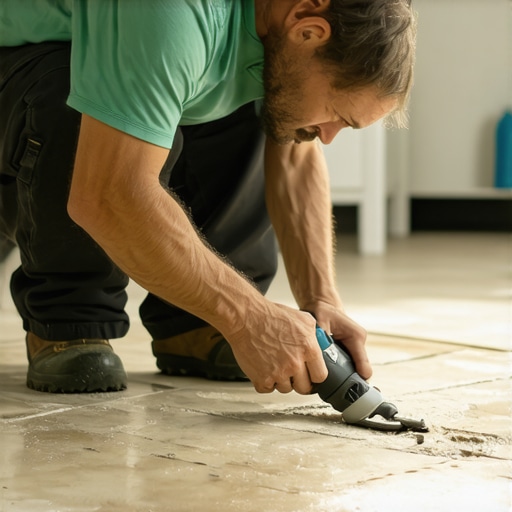
Suggested Image Description: A close-up of a homeowner using an oscillating multi-tool to carefully remove or re-grout tiles, illustrating precision maintenance techniques.
Lessons That Changed My Approach to Flooring and Showers
One of the biggest realizations I had was that almost every failure or issue in home improvement projects traces back to overlooked nuances. I once thought that a quick patch could fix a bouncy subfloor, only to find cracks developing months later. The lightbulb moment was understanding that true durability comes from meticulous attention to foundational details, not just aesthetic finishes.
Another insight was the importance of environmental factors. Moisture and temperature fluctuations are silent enemies, especially in shower niches and basement flooring. Addressing these at the planning stage, using proper waterproofing and suited materials, can save countless headaches down the road.
Finally, I learned that patience and precise execution—like double-checking measurements and allowing for expansion gaps—pay off immensely. Rushing often leads to misalignments, gaps, or damage, which are costly to fix later. Being detail-oriented from the beginning transforms an average project into a lasting improvement.
Toolkit and Resources That Elevate My Projects
My go-to tool for every flooring repair is a quality moisture meter. It reveals damp spots invisible to the eye, preventing mold and warping issues. I also rely on an oscillating multi-tool, which makes grout removal and delicate sanding effortless, saving time and preserving surrounding areas. For planning, I use CAD software that helps me visualize tile layouts, ensuring every piece fits perfectly. Reading specific industry guides, like expert flooring tips for 2025, deepens my understanding of best practices and innovation, keeping my work competitive and durable.
Investing in these resources has made a significant difference in the longevity and appearance of my installations, and I highly recommend them for any DIY enthusiast or professional.
Your Next Big Step in Mastering Home Improvement
Turning knowledge into action starts with confidence. Embrace the small details—like proper subfloor preparation, waterproofing in niches, and patience during installation—and you’ll build not just beautiful floors and showers but also peace of mind. Remember, a well-executed project today prevents costly repairs tomorrow. So, gather your tools, plan thoroughly, and take pride in every step—you’re creating a foundation that lasts. Ready to elevate your home renovation game? Share your experiences or ask questions below, and let’s grow together in mastering these crucial techniques.