

I’ll never forget the moment I realized my beautiful vinyl plank flooring didn’t quite sit flush against my stone fireplace. I was elbow-deep in adhesive, frustration mounting, when it hit me—I’d been overlooking a simple, yet crucial step: properly scribing the planks. That lightbulb moment transformed my approach and saved me from hours of rework.
The Hidden Challenge of Vinyl Planks and Irregular Surfaces
Scribing vinyl planks to a stone fireplace isn’t just about cutting; it’s about achieving a seamless fit on a surface that’s often uneven and textured. Without the right technique, gaps and misalignments become inevitable, making your project look sloppy and unprofessional. Trust me, I’ve been there—trying to force square pegs into round holes, only to end up with gaps or worn-out edges.
Today, I’ll walk you through the foolproof method I perfected—based on my own trials, errors, and eventual success—to scribe vinyl planks flawlessly against a stone feature. Whether you’re tackling a DIY upgrade or renovating a room, mastering this skill will elevate your craftsmanship and ensure your flooring looks smooth and polished.
Ready to turn those awkward corners into perfection?
Let’s dive into a technique that will make your installation both accurate and stress-free. But first, a quick note—one mistake I made early on was neglecting to account for the irregularities of the stone surface, which led to gaps and unnecessary re-cutting. Learning how to adapt to uneven surfaces is the secret to professional results, and I’ll share that with you next.
Thank you for trusting me with your project planning. Now, let’s get those vinyl planks fitting the way they should—flush and beautiful!
Careful Surface Preparation Is Key
Before you even cut your vinyl planks, inspect the surface of your stone fireplace closely. I once started without a proper assessment, and my planks ended up uneven and gaps appeared. Use a straightedge to identify high and low spots and plan to address them. For minor irregularities, a belt sander or coarse grit sandpaper can level uneven patches. Remember, a smooth surface ensures your scribing and cutting will be precise, reducing time spent on adjustments later.
Outline the Profile with Cardboard or Kraft Paper
To transfer the complex shape of the stone, I recommend pressing strips of cardboard or kraft paper against the uneven surface. This tricks the eye into visualizing the perfect cut line. Once pressed into place, cut the paper along the edges, creating a custom template that contours perfectly. I learned this tip from my experience with installing baseboards on irregular walls, and it gave me a custom fit that looked professional.
Transfer the Template to the Vinyl Plank
Lay your cut paper or cardboard template onto the vinyl plank. Use a pencil or chalk to trace along the template edges. When working with vinyl, I find using a wax pencil or fine-tipped marker helps keep lines visible yet easily erasable if adjustments are necessary.
Cutting the Vinyl with Precision
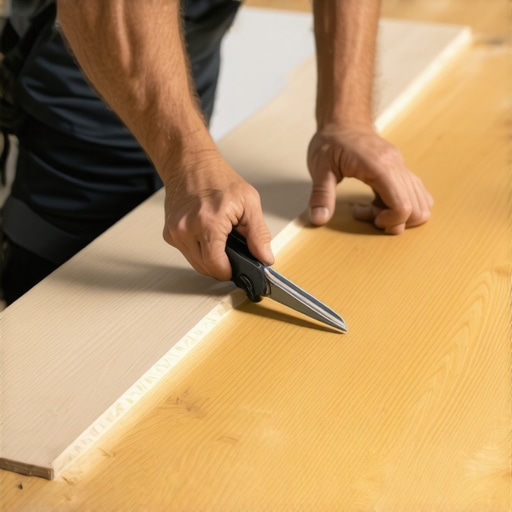
Secure the vinyl plank on a sturdy work surface. Use a fine-tooth saw or a utility knife with a new blade to cut along your traced line. Make slow, steady passes; rushing causes jagged edges that compromise fit. During my first attempt, I tried to cut quickly, but the edge crumbled, leading to gaps. Patience and sharp tools are essential for clean cuts.
Test Fit and Adjust as Needed
Place the cut plank back onto the surface. Check for gaps or unevenness. minor adjustments can be made by trimming small slivers with your utility knife. In one project, I had to trim twice because I was off by just a millimeter, but it ensured the final fit was seamless. Always keep a few extra scrap pieces to practice or make minor adjustments.
Use a Mallet or Tap Block to Seat the Plank
Once fitted, gently tap the vinyl into place using a tapping block and rubber mallet. This ensures full contact with the substrate and helps avoid air pockets or loose edges. I learned this method from professional flooring installers—it’s a subtle technique that makes a big difference in the final appearance.
Seal Edges with Suitable Caulk or Trim
If gaps remain, use a flexible, paintable caulk or trim to conceal minor imperfections. For my project, applying a matching color silicone along the edges prevented dust accumulation and provided a finished look. Proper sealing not only improves appearance but also extends the lifespan of your installation.
Mastering these steps takes patience, but the result is a perfectly fitted vinyl plank surface that melds seamlessly with irregular stone. For more on finishing your space, check out tips on baseboard styling to complement your new flooring.
 Even experienced DIY enthusiasts and professionals often fall prey to misconceptions about finishing touches like showers, carpet installation, or flooring. One widespread myth is that ceilings and walls must be perfectly flat for any project to look professional. In reality, understanding the subtle irregularities and how to work with them—rather than against them—can dramatically improve your results. For example, many believe that a seamless grout line on tiled surfaces is purely about impeccable cutting, but mastering surface preparation and joint management makes all the difference, as outlined in expert guides on [tile installation](https://tilecraftsmens.com/your-guide-to-durable-flooring-installation-for-a-stylish-home).
What sophisticated techniques do top contractors use to hide imperfections that amateurs overlook?
Another common trap is oversimplifying ventilation and moisture control in showers. Simply installing a drain and a vent isn’t enough; improper sealing and vapor barrier techniques lead to expensive repairs down the line. Many think that standard waterproof membranes suffice, but detailed research from industry leaders highlights the importance of triple-layer vapor barriers and correct flange sealing to prevent mold and water damage, which you can explore further in [shower renovation ideas](https://tilecraftsmens.com/shower-renovation-ideas-modern-designs-for-a-luxury-feel).
In carpet installation, a frequent mistake involves neglecting the importance of subfloor evaluation. Newcomers often assume that a clean, flat surface is all they need, but hidden moisture, unevenness, or residual adhesives can cause ripples and premature wear. Advanced installers employ moisture meters and precise leveling techniques—an art often overlooked, as discussed in [flawless carpet results](https://tilecraftsmens.com/carpet-install-secrets-achieving-flawless-results-every-time).
Similarly, in baseboard fitting, many think that simple miter cuts are enough, but the real secret lies in understanding wall bowing and irregularities. Techniques like scribing or using flexible trim can create a clean, professional finish even on crooked surfaces. For a detailed approach, see [baseboard makeover tips](https://tilecraftsmens.com/baseboards-makeover-elevate-your-interior-with-simple-updates).
Taking on flooring installation, especially with wide planks or complex patterns, requires more than just laying pieces down. Advanced methods involve joint stabilization, moisture control, and precise acclimation, ensuring your beautiful floors won’t buckle or gap over time. Industry studies confirm that proper subfloor preparation and climate control are key to durable flooring, as discussed in [expert flooring tips](https://tilecraftsmens.com/transform-your-home-expert-flooring-installation-tips-for-2025).
Let’s not forget the importance of understanding each project’s hidden nuances—those small, often unnoticed details that make the difference between amateurish and professional finishes. Have you ever fallen into this trap? Let me know in the comments.
Maintaining your home improvements effectively is key to ensuring long-term beauty and function. From keeping your shower seals waterproof to preserving your baseboards and flooring, the right tools and routines make all the difference. After completing a professional flooring or carpentry project, establishing a maintenance plan is crucial to prevent issues and extend the lifespan of your work.
Invest in Quality Tools for Upholding Your Work
High-quality tools are the backbone of successful upkeep. For instance, a precision moisture meter such as the [Protimeter Mosaic](https://tilecraftsmens.com/why-your-hardwood-is-cupping-and-the-moisture-meter-test) allows you to monitor where moisture levels might threaten wooden fibers or baseboards, preventing warping or mold. Regular checks with such equipment enable early intervention if moisture levels fluctuate unexpectedly.
Another essential tool is a soft-bristle brush or microfiber cloth, ideal for dusting and cleaning delicate surfaces like grout lines or polished wood. Avoid abrasive scrubbers, which can damage finishes, especially with materials like natural stone or glossy floors.
Routine Maintenance Practices for Longevity
Establishing a cleaning schedule tailored to your specific surfaces preserves their integrity. For flooring, sweeping frequently prevents grit from scratching surfaces—a common culprit behind premature wear. For carpets, scheduling professional deep cleans using steam extraction maintains appearance and health, as outlined in this guide.
Sealing grout lines periodically with specialized sealants protects against water penetration, especially in bathrooms and kitchens. For example, using a penetrating sealant like silicone-based formulas can prevent staining and mold growth, ensuring your tile work stays pristine.
Scaling Up: Long-Term Results and Planning
Anticipating future needs involves choosing versatile tools that adapt to evolving projects. A pneumatic nailer or a cordless multi-tool can handle temporary repairs, edge trimming, or adjustments without requiring professional assistance, saving time and costs.
Moreover, establishing a recurring inspection routine—checking for loose baseboards, cracked grout, or signs of water damage—can catch problems early. Documenting your maintenance using simple checklists helps keep track of when specific tasks are due, extending the life of your installations.
How do I maintain my shower seals and prevent leaks over time?
Maintaining your shower’s waterproofing involves regular inspections and reapplication of sealant around niches, corners, and doorframes. Using a liquid membrane can reinforce existing seals, preventing leaks before they start. A proactive approach, combined with proper cleaning and drying after each use, ensures your shower remains leak-free for years to come. For complex repairs or upgrades, consulting a professional can provide peace of mind and thorough results. To get personalized advice, visit our contact page.
Remember, consistent maintenance is the secret to preserving your home’s craftsmanship. Incorporate these tools and routines into your home care arsenal, and you’ll enjoy the beauty and durability of your investment for many years. Don’t hesitate—try out a moisture meter or re-seal your grout this weekend to see immediate benefits and start building your maintenance habit today.
What I Wish I Knew Before Getting Started
- Misjudging surface irregularities can turn a simple project into a frustrating puzzle. Taking the time to assess and prepare surfaces can save hours of rework and headaches.
- Overconfidence in straight cuts without templates often leads to gaps. Using cardboard or kraft paper as a custom scribe can make the difference between a sloppy finish and professional perfection.
- Patience with cutting and fitting isn’t just a virtue—it’s a necessity. Rushing leads to jagged edges and misalignments, but slow, deliberate work pays off with seamless results.
- Sealing minor gaps with flexible caulk not only improves appearance but also extends the lifespan of your installation. Don’t overlook these small details—they matter.
- Investing in quality tools, from precision saws to moisture meters, equips you to handle unexpected issues gracefully. Good tools foster good results and confidence.
Tools That Transformed My Approach
- Precision utility knife with fresh blades: Essential for clean, controlled cuts on vinyl and trim.
- Flexible scribing tools: Cardboard and kraft paper templates ensure a tight fit against irregular surfaces.
- Moisture meter like the Protimeter Mosaic: Detect hidden moisture issues that could compromise your flooring or wood trim.
- Rubber mallet and tapping block: Gentle yet effective for seating planks and trim without damage.
Embrace the Journey of Home Improvement
Taking on projects like vinyl plank flooring and baseboard installation can be incredibly rewarding when approached with patience, preparation, and a willingness to learn from experience. Remember, the satisfaction of a flawless finish makes every challenge worth it. When you’re ready to elevate your space, keep experimenting and refining your technique—you’re capable of achieving results that rival professionals. Have you ever stumbled upon a game-changing tip that transformed your installation process? Share your stories below, and let’s learn together!