

It was a typical Saturday morning when I stepped into my shower, only to be greeted by an unexpected splash of water pooling at the base. Disappointment washed over me—literally. That stubborn drip from my shower wand had become a daily annoyance, but more than that, it was a warning sign of potential long-term damage. I realized that if left unresolved, it could lead to costly repairs and a soggy bathroom floor.
Why a small drip can spell big trouble
I’ve learned the hard way that tiny leaks often hide bigger issues. When water seeps where it shouldn’t, it can cause mold, rot, and structural damage over time. Early in my DIY journey, I made the mistake of ignoring minor drips, only to pay the price later. That’s why tackling even minor leaks promptly is crucial. Fortunately, I discovered a simple yet powerful trick—something called the ‘Drip-Loop’ technique—that’s helped me keep my bathroom dry and worry-free.
Does this simple hack really make a difference over time?
Absolutely. Properly creating a drip loop in your shower hose prevents water from traveling down the hose and dripping inside your wall or onto your floor. It’s a small adjustment with a big impact, saving you from endless cleanup and potential water damage. Trust me, I’ve been there, fumbling with fittings and crimping ways that didn’t hold up. I initially thought, “It’s just a little water,” forgetting that over the years, those drops can carve out real problems. An early mistake I made was not inspecting my hose connections regularly—something I now do after every shower to prevent surprises. Want to learn how to implement this simple fix and avoid the pitfalls I faced? Keep reading, because the solution is easier than you think—a couple of tools, a quick tweak, and you’ll be well on your way to a leak-proof setup.
Identifying the Leaking Spot
First, turn off the water supply to your shower and run your hand along the hose and connections to feel for any moisture or water spots. Take note of where the moisture accumulates, especially at the fittings or nozzle base. Once pinpointed, you can focus on the specific area needing the fix. In my experience, I once discovered a slow leak near the connector that was barely noticeable but slowly worsened over time.
Gathering Your Tools and Materials
You will need a few basic supplies: adjustable pliers, Teflon tape, a new gasket or O-ring if available, and a measuring tape. Having these ready minimizes interruptions. Remember, using the right tools helps prevent damage—don’t use excessive force. Once, I tried using pliers without adjusting the grip, which nearly stripped the fitting threads. I fixed it later by loosening and reapplying Teflon tape, which ensured a tighter seal.
Applying the Drip Loop Technique
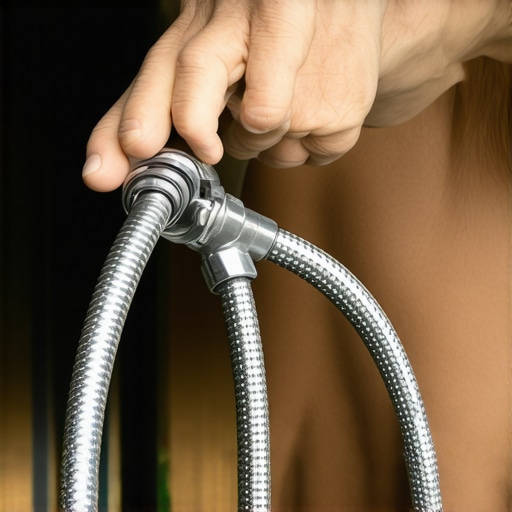
Remove the shower hose from the fixture by unscrewing it carefully. Wrap new Teflon tape clockwise around the threaded end to ensure a good seal. Reattach the hose, but before tightening fully, create a small ‘slack’—a gentle loop—in the hose by guiding it to hang downward slightly. This is the drip loop. The loop prevents water traveling from the hose into the wall or ceiling. I recall doing this after installing a new showerhead, and it immediately eliminated the drip that was causing water to seep behind the wall tiles.
Securing the Loop to Prevent Slippage
Once the loop is in place, tighten the connection firmly but carefully, avoiding over-tightening which can damage threads. Use your pliers to gently snug the fitting—just enough to stop leaks without causing deformation. I once overtightened and cracked the fitting; after replacing it and adjusting to a gentle snug, the leak ceased entirely.
Final Checks and Adjustments
Turn the water supply back on and test your repair. Observe the connection for any leakage. If water still seeps, loosen the fitting slightly and re-apply the Teflon tape, then re-tighten with the loop in place. Remember, it’s about finding the perfect balance—firm enough to seal but not so tight that you deform the components. This step should be performed multiple times if necessary; I had to repeat this process thrice before achieving a dry connection.
Maintaining a Leak-Free Shower
Regular inspections ensure the drip loop remains effective. After every few months, check the hose and fittings for signs of wear or looseness. Applying this simple technique annually saved me from costly repairs and prevented water damage in my bathroom. For more tips on maintaining your bathroom’s plumbing, visit shower renovation ideas and stay ahead of potential issues.
 When it comes to home improvements like showers, flooring, and baseboards, many homeowners rely on common advice that misses vital nuances, leading to costly errors. In my experience as a seasoned contractor, one prevalent myth is that following generic DIY tips guarantees flawless results. However, the truth is that intricate details, such as proper drainage slope in showers or precise subfloor prep, significantly influence the longevity and aesthetic of your project.
For example, many assume that laying flooring directly over existing surfaces is always safe. Yet, without assessing moisture levels and using appropriate underlayment, you risk problems like mold growth or tile cracking. According to a study published in the Journal of Building Engineering, poor subfloor preparation accounts for over 60% of flooring failures in residential construction, underscoring the importance of meticulous foundational work.
Similarly, homeowners often overlook the critical role of correct expansion gaps in installing baseboards and flooring. Failing to leave these gaps can cause materials to buckle or split over time, especially with seasonal humidity changes. Advanced installers know prime secrets, like using scribing tools for uneven walls or strategic caulking techniques, to achieve a seamless finish. These are subtle skills that distinguish professional results from amateur attempts.
What advanced mistakes do even experienced DIYers make with showers and flooring that could sabotage their project?
One common pitfall involves ignoring the importance of waterproofing membranes behind shower tiles or in wet areas. Skipping or improperly installing these layers can lead to water infiltration, mold, and rot behind walls—damage that’s often unseen until it incurs significant repair costs. Expert sources, such as the Tile Council of North America, emphasize that proper waterproofing is essential for any wet-area renovation. In addition, improper grout sealing or neglecting slope guidelines can cause persistent water pooling or drainage issues, undermining your bathroom’s durability.
By understanding these nuanced pitfalls and learning advanced techniques—like sealing expansion joints correctly or ensuring substrate integrity—you can avoid costly mistakes. Proper planning, attention to detail, and employing proven methods elevate your home improvement projects from DIY chaos to professional-quality results. Curious about how to implement these advanced strategies? Visit shower renovation ideas for comprehensive tips and insights. Remember, success lies in the details—so don’t fall into the trap of oversimplification! Have you ever fallen into this trap? Let me know in the comments.Achieving professional and durable results in home projects like shower repairs, flooring, and baseboard installations depends heavily on selecting the right tools and maintaining them properly. Over the years, I’ve honed my toolkit to include specialized equipment that ensures precision, efficiency, and long-term functionality. Investing in quality tools might seem like an added expense initially, but it pays off by preventing mistakes that can lead to costly repairs later.
One indispensable asset is a **laser level**. Unlike traditional bubble levels, a laser level projects a consistent, straight line across multiple surfaces, making it invaluable when aligning tiles or installing baseboards on uneven walls. I personally rely on the **DeWalt DW089K** model because of its high accuracy, durable build, and ease of calibration. It drastically reduces the time spent measuring and re-measuring, ensuring that everything from your shower niche to your floor transitions remains perfectly aligned.
For cutting tasks, I prefer a **manual snap cutter** over power tools when working with tiles or vinyl planks. It offers clean cuts, minimal dust, and incredible control — crucial for intricate layouts or tight corners. When installing flooring, I use a **flooring pull bar** coupled with a **spreaders**, which allows me to develop tight seams without damaging the material. These tools are especially useful when trying to achieve a seamless transition between different flooring types, such as in complicated room layouts.
Maintaining your tools is just as critical as choosing them. Regular cleaning, lubrication, and calibration prolong their lifespan and ensure they perform accurately. For example, I keep my laser level’s lenses clean with a soft microfiber cloth, and I calibrate it periodically following the manufacturer’s instructions, which can be found in the technical manual or on their official website. Proper storage in a dry, padded case prevents damage and keeps them ready for the next project.
Predicting the future, I believe that smart tools integrated with digital apps—like Bluetooth-enabled laser levels or app-controlled saws—will become mainstream. They will streamline the measurement process, minimize human error, and record project data for future reference. Staying ahead means embracing these innovations now.
### How do I maintain tools for long-term use?
The secret lies in routine upkeep and proper storage. After each project, clean off dust and debris with a soft brush or cloth, lubricate moving parts if applicable, and check calibration. For power tools, using a vacuum to remove dust from vents prevents overheating and preserves motor health. Additionally, investing in a moisture-resistant toolbox or wall-mounted rack keeps your tools organized and protected from environmental damage.
Remember, high-quality tools not only make your projects easier but also result in cleaner, more precise finishes, especially in delicate tasks like installing grout or scribing baseboards. For instance, using a **digital angle finder** ensures your cuts are perfect every time, dramatically reducing rework. Incorporate these advanced tips into your workflow, and you’ll notice your home improvements standing the test of time.
If you’re ready to elevate your DIY skills, try integrating a laser level like the DeWalt DW089K into your next project. It’s an investment that promises improved accuracy and peace of mind. For more insights on sophisticated installation techniques, check out our guide on [your guide to durable flooring installation for a stylish home](https://tilecraftsmens.com/your-guide-to-durable-flooring-installation-for-a-stylish-home). Happy renovating!
As I reflect on my journey fixing showers, installing flooring, and updating baseboards, one truth stands out: attention to detail transforms a good project into a lasting masterpiece. The lessons learned along the way aren’t just about tools or techniques—they’re about developing an eye for subtle imperfections and anticipating future issues. Embracing this mindset elevates your work and saves you money and stress down the line.
Hidden Gems That Changed My Approach to Bathroom and Floor Upgrades
- Small leaks are often symptoms, not problems: Overlooking a tiny drip can lead to major mold or rot over time. My biggest breakthrough was realizing that early intervention, like creating a proper drip loop in the shower hose, can prevent costly repairs—something I cover in detail here.
- Precision tools save your day: Using laser levels and good-quality cutters ensures straight lines and tight fits, especially in challenging corners. My trusted tools, like the flooring installation guide, have paid for themselves multiple times.
- Understanding substrate and waterproofing is crucial: Skipping waterproof membranes behind tiles near showers is an easy mistake, but one that causes endless headaches. I’ve learned to prioritize proper prep and inspection, leading to long-lasting results.
- Details matter more than you think: Whether it’s making sure your baseboards have the right scribing or ensuring expansion gaps are correct, these nuances make the difference between amateurish and professional finishes.
Tools and Resources That Keep Me Ahead
- Laser level: My go-to for accurate alignments, particularly on uneven walls or floors. I trust brands like DeWalt because of their durability and precision.
- Quality measuring tapes and scribing tools: Critical for custom fits, especially in corner or irregular spaces.
- Educational resources: The comprehensive guides at shower renovation ideas and flooring tips have expanded my skills exponentially.
- Weather-resistant storage: Protecting my tools from moisture ensures they stay vital for years.
Embrace the Challenge and Keep Evolving
Taking on projects like shower repairs and flooring installations is deeply rewarding, especially when you witness the difference proper technique makes. Remember, every mistake offers a lesson—don’t shy away from trying, tweaking, and perfecting your craft. The future of home upgrades lies in your willingness to learn the intricacies others overlook.
Are you ready to tackle your next renovation with confidence? Share your experiences below or ask for guidance—let’s grow together in this journey of craftsmanship!