

I remember the day I learned this the hard way. I had just finished installing a sleek, large-format tile in my shower, dreaming of that perfect, seamless look. But a few months later, I noticed a small, stubborn crack creeping across the tile surface. Turns out, I had picked the wrong thin-set mortar. That tiny mistake cost me time, money, and peace of mind. It was a lightbulb moment—why choosing the right thin-set for large-format shower tiles isn’t just a detail; it’s the foundation of a durable, beautiful shower.
Why Thin-Set Selection Can Make or Break Your Shower Project
When tackling a shower renovation, especially with large-format tiles, most homeowners get caught up in selecting the tile design or fixtures. But surprisingly, the secret to a lasting, professional-looking shower often lies beneath the surface—literally. The type of thin-set mortar you use acts as the adhesive that holds your tiles securely, absorbs movement, and prevents cracks or water damage over time.
Choosing an inappropriate thin-set can lead to issues like tile sagging, cracking, or even water infiltration, which might not be apparent immediately. This is why I always emphasize, from my own experience and professional advice, that understanding your options is crucial. According to industry experts, the correct thin-set can increase the lifespan of your tiles and reduce long-term maintenance costs significantly. For more tips on creating an exceptional shower experience, check out this guide.
Is the Hype About Thin-Set Really Warranted?
I admit, I was initially skeptical about how much influence thin-set could have. I thought, “It’s just glue, right?” But I made a costly mistake early on—using a standard thin-set with a large-format tile. Not only did I face fixing cracks later, but I also learned that not all mortars are created equal. The right thin-set isn’t just about adhesion; it’s about flexibility, absorption, and compatibility with your tile size and material. So, if you’ve ever wondered whether investing in high-quality thin-set is worth it, trust me, it’s the difference between a shower that lasts and one that needs future repairs.
Preparation is Key: Surface and Material Readiness
Start by ensuring your substrate is perfectly clean, dry, and level. Remove any debris, dust, or old adhesive residues. A wobbly or uneven surface will cause your large-format tiles to crack or shift over time. I remember a time I neglected this step, resulting in tiles that sagged within weeks. To prevent this, I used a level and a straightedge to check the subfloor and wall surfaces, correcting any high or low spots with a self-leveling compound. This simple step guarantees a flat surface, essential for an even, professional finish.
Mixing Thin-Set for Success
Proper mixing impacts the mortar’s adhesion and flexibility. Use a clean bucket and a paddle mixer attached to a drill. Follow the manufacturer’s instructions precisely—typically, mix powder with clean water until a creamy, lumps-free consistency is achieved. Think of this step like preparing batter for baking; too watery or too thick compromises stability. I once mistakenly added too much water, which compromised the mortar’s bonding ability. Mix vigorously for a few minutes, then let it sit for 5 minutes to settle any air bubbles before applying. Consistent mixing ensures even curing and reduces the risk of cracks.
Applying Thin-Set Like a Pro
Spread the mortar using a notched trowel—select a size suited for your tile dimensions; for large-format tiles, a 1/4″ to 1/2″ notch is ideal. Hold the trowel at a 45-degree angle to create ridges, which help the mortar settle evenly and improve adhesion. I once tried to apply thin-set with a flat margin and ended up with uneven coverage, causing tiles to loosen later. Press the tile firmly into place, twisting gently to embed the mortar and eliminate air pockets. Use spacers to maintain consistent grout joints. Remember, work in small sections to prevent the mortar from drying before tile placement—once the mortar loses its adhesive quality, your tiles won’t bond properly.
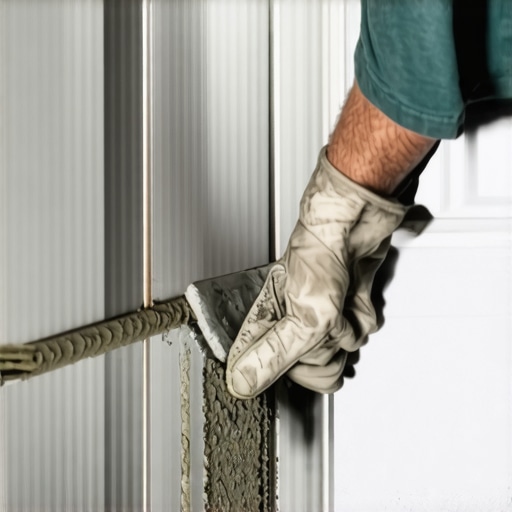
Visualize spreading adhesive with a notched trowel—ensure even coverage to prevent tiles from rocking or cracking.
Achieving a Level Finish
As you set each tile, regularly check levels with a spirit level or laser level. For tiles on uneven surfaces, use small shims or adjust mortar edges during placement. Take special care with large tiles, which are more prone to sag or warp. I overcame a stubborn wavy wall by applying thin-set carefully and adjusting tiles incrementally, ensuring a flat surface for grout lines. Consistent checking prevents misalignment and gives a professional, sleek appearance.
Allowing Proper Curing and Grouting
Let the thin-set cure undisturbed for at least 24 hours before grouting. Protect the tiles from foot traffic or water exposure—moisture can weaken the bond if disturbed prematurely. When grouting, use a rubber float to press the compound into joints at a 45-degree angle. Clean excess grout with a damp sponge before it hardens. Rushing this process can lead to cracks or uneven joints, which ruin the aesthetic and durability of your shower. Patience during curing is what turns a good installation into a lasting masterpiece.
Many homeowners assume that following basic instructions guarantees a flawless finish in projects like flooring, carpet installation, or shower remodeling. However, this oversimplification overlooks subtle nuances that can make or break your results. For instance, a common misconception is that using the thickest mortar or adhesive ensures better bonding. In reality, excessive adhesive can cause uneven surfaces, leading to tiles or flooring that crack or pop loose over time. Precision in material selection and application techniques is crucial to prevent such issues.
Are All Thin-Set Mortars Equal for Large-Format Tiles?
Contrary to popular belief, not all thin-set mortars perform equally, especially with large-format tiles. Advanced professionals often favor polymer-modified thin-sets because they offer enhanced flexibility and adhesion, reducing the risk of cracks due to substrate movement. According to industry expert Mike Holmes, choosing the right mortar tailored to your tile size and substrate can extend the lifespan of your installation significantly. Relying solely on generic products or skipping this step can be a costly mistake that undermines your project’s durability.
Another overlooked aspect involves baseboards and their interaction with flooring. Many installers neglect to account for slight wall variations, resulting in gaps or uneven miters. Utilizing a scribing tool or adjusting miters on-site ensures a seamless look. For trendy updates or classic styles, exploring current baseboard trends can provide fresh styling ideas while maintaining a professional edge.
aller hardware and cleaning tools can contribute to uneven grout lines or tile shifting. A simple error like inadequate surface prep, such as not leveling the subfloor properly, can lead to a wobbly or uneven floor that wears prematurely. This is especially true in shower areas, where moisture exacerbates underlying flaws. Experts recommend performing a subfloor assessment, including a moisture test, before installation. For a comprehensive approach, explore this guide to durable flooring for detailed tips.
Proper mixing and application of adhesives also deserve attention. Over-mixing can introduce air bubbles, weakening bond strength, while under-mixing results in inconsistent flow. Think of it as baking—precision matters. Use a paddle mixer on a drill, follow the manufacturer’s instructions diligently, and always let the mixed compound rest briefly before application. These small steps help prevent future issues like cracking or debonding.
In shower remodels, neglecting the slope or waterproofing can lead to water leaks and structural damage. Some homeowners believe that a well-grouted curb suffices, but without proper slope and membrane layering, water infiltration remains a risk. Incorporating a pre-formed foam curb or performing a slope test with the
Maintaining Excellence with the Right Equipment
To keep your flooring, carpets, baseboards, and showers functioning perfectly over time, investing in high-quality tools and adopting precise methods is essential. My go-to tool for ensuring flat, seamless surfaces is a laser level. Unlike traditional bubble levels, laser levels project a continuous beam that covers the entire room, making alignment of tiles, baseboards, or shower fixtures much more accurate. I personally prefer the Leica DISTO series because it combines laser precision with Bluetooth connectivity, allowing me to measure distances quickly and save data for future reference, streamlining my workflow and reducing errors.
When applying adhesives or grout, I rely on a paddle mixer attached to a variable-speed drill. This ensures thorough mixing, eliminating lumps and air bubbles that can compromise long-term durability. I always set the mixer to a medium speed—fast enough to blend materials evenly but slow enough to prevent spattering. For grouting, I use a rubber float with an ergonomic handle; the flexibility helps press the grout into joints uniformly, preventing cracks and ensuring a uniform appearance.
Tools That Are Worth the Investment
For cutting large-format tiles or adjusting baseboards, a wet saw with a diamond blade from brands like MK Diamond delivers clean, precise cuts and reduces material waste. Over the years, I’ve appreciated how a reliable saw improves efficiency and reduces material stress, which translates to longer-lasting results. For detail work around shower niches or complex corners, I recommend a multi-tool with variable plunging capabilities. It allows for intricate cuts that standard tools can’t handle, crucial for professional finishes.
Long-term results depend heavily on proper sealing and maintenance. Using a grout float with a built-in sponge reservoir, like the Qep Grout Float, allows for quick clean-up during installation, preventing the accumulation of residues that can cause staining or degradation over time. Also, regular inspections with a moisture meter can spot hidden issues early, especially in shower areas prone to water infiltration. I recommend the Protimeter Surveymaster for its reliability and ease of use, helping catch potential problems before they escalate.
Anticipating Future Trends in Maintenance & Tools
The future points toward smarter, connected tools. Imagine laser levels that automatically calibrate themselves or moisture meters that sync data to your mobile device, providing ongoing monitoring. This integration can facilitate proactive maintenance, extending the lifespan of your installations and reducing costly repairs.
How do I maintain my flooring and shower setups over time?
Consistent maintenance is key. Regularly clean tiles and grout with pH-neutral cleaners, inspect for signs of water seepage or grout deterioration, and re-seal surfaces annually using a high-quality sealer—especially in showers. Implementing routine checks with a moisture meter can detect leaks early, preventing extensive damage. Adopting these practices and using the right tools not only preserves your investment but also makes future renovations smoother and more cost-effective. For expert tips on creating a spa-like shower experience, explore this comprehensive guide.
Try integrating a laser level into your next project for unparalleled accuracy. It’s an advanced tip that can significantly improve your results and save time in the long run. Investing in quality tools will pay dividends in durability and aesthetic appeal, ensuring your home stays stylish and functional for years to come.
The Hard-Won Wisdom Nobody Tells You About Large-Format Tiles
Looking back, I realize that choosing the wrong thin-set taught me a critical lesson: every detail, from substrate prep to mortar selection, impacts the longevity and beauty of a shower. Don’t assume that skipping thorough surface assessment or rushing mixing steps won’t come back to bite you. My biggest lightbulb moment was discovering that small mistakes compound, leading to cracks or water issues down the line. Trust in meticulous prep and quality materials, because your home deserves that level of care.
My Tools of Choice—Because Precision Matters
Investing in the right tools can drastically improve your results. I swear by laser levels, like the Leica DISTO, for ensuring perfect alignment—what I thought was a luxury turned into necessity. A high-quality wet saw with a diamond blade ensures clean cuts, reducing tile stress and waste. These tools aren’t just gadgets; they’re your best friends when striving for professional, durable installs. Not sure where to start? Explore my recommended toolkit for flooring and tiles that has transformed my projects and boosted confidence in my craftsmanship.
The Courage to Tackle Big Projects Starts with Small Wins
Embarking on a shower remodel or large-format tile installation might seem daunting, but the key is embracing patience and progress. I encourage you to take each step—surface prep, mixing, setting, curing—with care. Celebrate small victories: leveling surfaces, adjusting tiles, perfecting grout lines. Overcoming initial fears and committing to best practices will build your mastery. Remember, every expert was once a beginner, and with each project, you hone valuable skills that last a lifetime.