

One day, I was mid-cleaning my living room, and I noticed that a small section of my carpet had developed a stubborn snag. It was like a tiny, unruly loop that kept catching on my furniture legs and tripping me up. At first, I thought, “Great, now I need to replace the whole section,” but then I remembered something that saved me both time and money. Have you ever faced a similar dilemma, where a carpet snag seems like a disaster but you’re hesitant to commit to a full replacement? If yes, then stick around—I’ve been there and found some surprisingly simple tricks to fix those pesky snags without tearing out the entire carpet.
Say Goodbye to Carpet Replacements: Quick Repairs That Work
Today, I want to walk you through my go-to methods for repairing carpet snags. These solutions are perfect for anyone who wants to maintain the look of their space without the hassle of a costly and time-consuming replacement. Over the years, I’ve tested a few techniques, and I’ll share the ones that truly deliver. Trust me when I say—dealing with snags isn’t the end of the world, and with a little patience, you can make your carpet look as good as new. Plus, avoiding full replacement helps preserve your flooring investment and keeps your home looking fresh and inviting.
Skeptical? Don’t Worry, You’re Not Alone
I remember making the mistake of pulling aggressively at a snag early on, thinking I’d just rip it out quickly. But I ended up making it worse! That taught me the importance of gentle, precise fixes. If you’re worried about damaging your carpet further or not knowing where to start, know that my methods are based on tried-and-true strategies I’ve perfected over time. Want to learn more? Check out some expert tips on achieving flawless results at this link.
Now, let’s dive into the practical steps to tame those annoying snags and keep your carpets looking pristine. So, if you’re tired of hiding or replacing, stick with me—fixing carpet snags is easier than you think, and you’ll be surprised how little effort it takes to restore your flooring’s beauty.
Preparing Your Workspace for Repair
Begin by clearing the area around the snag, removing any loose fibers or debris. Wear gloves to protect your hands and a pair of sharp scissors to trim excess fibers. I once tackled a stubborn snag in my living room, and this initial cleanup prevented accidental pulls that could worsen the problem.
Assessing the Damage and Planning Your Fix
Evaluate the Snag Severity
Check if the snag is just a loop or if the fibers are pulled deep into the backing. For minor loops, a simple trim might suffice. If fibers are pulled into the backing, more intricate fixes are needed. I once thought a quick snip would fix my carpet, but I realized the snag was deeper, prompting me to follow a more precise method.
Backing Repair for Deep Snags
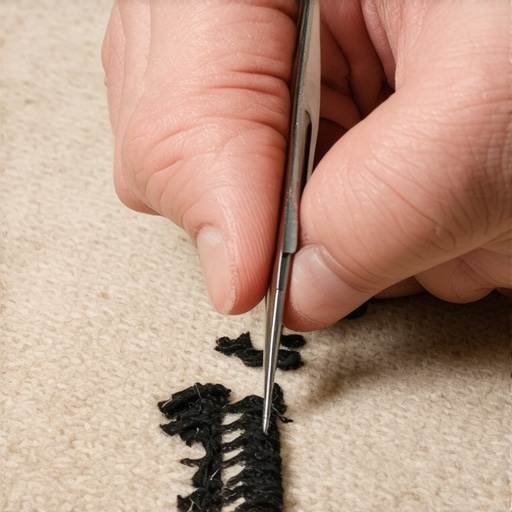
Use a fine needle or upholstery pin to gently pull trapped fibers back to the surface. Secure loose fibers with a small amount of carpet adhesive applied with a toothpick. For a tight, seamless look, press down gently to ensure the fibers lay flat. I remember carefully using a needle to tease fibers out from the backing, which made a noticeable difference in the final appearance.
Creating a Clean Cut for Minor Snags
For loops or protruding fibers, cut them flush with the carpet surface using scissors. Hold the fibers straight before trimming to ensure an even cut. Once, I had a rogue fiber sticking out, and after a quick trim, it virtually disappeared, restoring the carpet’s uniform look.
Smoothing and Securing the Repaired Area
Once the snag is addressed, use a spoon or the back of a knife to gently press fibers down and blend them with surrounding tufts. For added security, lightly mist the area with water and comb fibers into place. I discovered that gentle pressing prevents the snag from re-forming and helps the repair blend seamlessly.
Preventing Future Snags and Wear
Trim loose fibers regularly and avoid pulling on the carpet. Use rugs in high-traffic areas to distribute wear evenly. For stubborn snags or challenging repairs, consulting professional installers or referencing expert tips on carpet installation secrets can save you time and maintain your flooring’s integrity.
Remember, patience is key. With these techniques, you’ll fix snags efficiently, preserving your carpet’s appearance and extending its lifespan, much like how expert flooring installation tips emphasize careful preparation and precise execution for lasting results.
 When it comes to home renovations, many homeowners and even some professionals fall prey to misconceptions that can lead to costly mistakes. One widespread myth is that “perfect alignment” in flooring and baseboards is merely about aesthetics; in reality, small misalignments can cause significant issues over time, such as gaps or uneven surfaces. Advanced installers understand that factors like subfloor prep, seasonal humidity changes, and material expansion need meticulous attention to avoid these pitfalls. For example, neglecting acclimation of flooring materials can result in cupping or buckling post-installation, a mistake often overlooked by DIYers. The importance of proper subfloor leveling cannot be overstated, as even minor unevenness can compromise the integrity of tiles, hardwood, or vinyl planks, ultimately leading to additional repairs. According to flooring expert David Haynes, “Ensuring a level subfloor is the foundation of a flawless finish,” underscoring that what appears as a minor detail can determine the long-term success of your project.
What are advanced techniques to prevent joint and seam failures in high-traffic areas?
One common oversight is underestimating the impact of movement joints and expansion gaps, especially in large open-concept spaces. Many rely solely on caulking, but this can fail prematurely if not complemented by proper planning—such as strategic placement of expansion zones and the use of flexible sealants designed for movement. Proper application prevents stress fractures that often result from temperature fluctuations and structural shifts. Keep in mind that high-quality materials and professional-grade adhesives make a critical difference here, as documented in recent industry studies on flooring longevity (see [Transform Your Flooring](https://tilecraftsmens.com/transform-your-home-expert-flooring-installation-tips-for-2025)). This nuanced approach saves homeowners from expensive remedial work down the line. Similarly, in shower installations, assuming a simple grout fill suffices ignores the complex waterproofing layers required. Overlooking details like curb sealing, drain slope accuracy, and vapor barrier placement can lead to leaks and mold growth—problems that extend beyond aesthetic concerns. Mastering these advanced details ensures your renovation stands the test of time. Want to dig deeper? Visit [Expert Shower Renovation Tips](https://tilecraftsmens.com/shower-renovation-ideas-modern-designs-for-a-luxury-feel) for insights on creating a truly durable and luxurious bathroom. Finally, understand that each element—from baseboard installation to shower tiling—interacts within a system, and neglecting minor details can undermine the entire project. Approach each step with precision, patience, and a knowledge of hidden pitfalls. Have you ever fallen into this trap? Let me know in the comments.
Maintaining your home renovation investments demands not just skill but the right set of tools and a strategic approach. Over the years, I’ve honed a toolkit that guarantees precision, efficiency, and long-term durability in projects involving carpet, flooring, baseboards, and showers. The key lies in selecting equipment that offers consistent results and understanding the best practices for their application.
Your Go-To Tools for Seamless Installations and Repairs
For carpet installation, I swear by a high-density knee kicker, which allows me to stretch and secure even large areas with minimal wrinkling. Using a quality knee kicker ensures that the carpet stays taut and smooth, preventing future wrinkles or bubbles—a common issue in DIY projects. I also rely heavily on a pneumatic stapler for securing carpet edges, especially in transitions or stair treads, as it provides a firm hold without damaging the fibers.
When working with flooring, a laser level has become indispensable. It ensures perfect alignment across expansive surfaces, especially when dealing with high-traffic areas where seams and joints need to be virtually invisible. For difficult cuts, a fine-tooth utility saw combined with a straightedge guarantees clean, precise lines—crucial in tight corners or around irregularities.
Baseboard installation benefits from a corner block and a finish nail gun. The corner blocks help achieve clean, miter-free joints with a polished look, and a finish nail gun speeds up the process while minimizing wall damage. For long-term results, I apply a shim behind the baseboard where needed, to counteract minor wall imperfections, ensuring a level and flush appearance. For more advanced shimming techniques, check out this article.
Moving into shower maintenance and remodels, quality waterproofing materials are non-negotiable. I favor flexible, non-slip sealants like silicone caulk for grout joints because they accommodate movement and prevent cracks. For deeper repairs—like fixing leaks behind tiles—I use a multi-tool with a flush-cut blade to carefully remove damaged grout and tiles without disturbing adjacent surfaces.
Adopting these tools and techniques has transformed my approach from reactive fixes to proactive maintenance. In particular, I recommend investing in a laser level for flooring, as it streamlines alignment and saves countless hours correcting misalignments later. Looking ahead, I believe the trend will shift even further toward smart tools—like laser-guided digital levels and app-connected moisture meters—to ensure every project is perfect from start to finish.
How do I keep my flooring and shower systems functioning over time?
Regular inspections are essential. For flooring, check for loose tiles, gaps, or signs of water damage, and address issues promptly before they escalate. In showers, ensure seals and grout lines are intact; reapply caulk as necessary, using high-quality, mold-resistant sealers to prevent water ingress and mold growth. Implementing routine upkeep using the right tools can significantly extend the lifespan of your investment.
And speaking of maintenance, don’t underestimate the power of a quality waterproofing membrane behind shower tiles. Expert contractor advice, such as that found in modern bathroom renovation guides, emphasizes that meticulous waterproofing now saves costly repairs later. Try adopting a monthly check of your shower seals and reapplying sealant when it shows signs of wear—trust me, this will keep your shower leak-free for years.
In summary, equipping yourself with the right tools, mastering their application, and committing to consistent maintenance forms the backbone of long-term home care. Investing in quality equipment like a laser level or a finish nailer pays off through flawless results and fewer repairs down the line. As technology evolves, expect to see even smarter, more integrated tools that make this process easier and more precise. For now, start with the basics—like learning the proper use of shims or sealants—and see the difference it makes in your ongoing home maintenance journey.
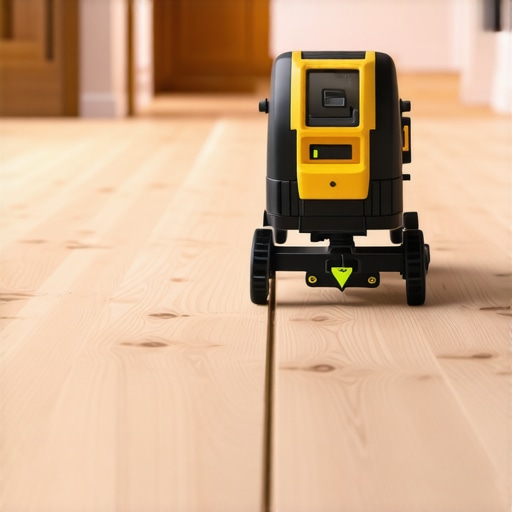
Visualize your next project with a detailed shot of a laser level in action, aligning flooring planks across a large room. This tool has revolutionized my installation process for seamless, professional finishes.
Lessons That Changed My Approach to Flooring and Fixtures
One of the most valuable lessons I learned was that patience truly pays off. Rushing through a carpet repair or tile installation often leads to mistakes that are hard to fix later. Taking the time to assess the damage, prepare properly, and execute with precision results in a flawless finish and satisfaction that no shortcut can match.
Another insight was the importance of investing in quality tools. Cheap equipment might save money upfront but can cause frustration, mess, and uneven results. For example, a high-quality laser level has become my go-to for ensuring perfect alignment in flooring, saving countless hours of correction.
Additionally, I discovered that understanding the underlying structure of a space—like the condition of the subfloor or the wall’s texture—can prevent future issues. Addressing these foundational details during your project saves time and money down the line and ensures a durable, professional result.
Gear Up with Tools That Truly Make a Difference
My essential toolkit for flooring and shower projects includes a laser level for accuracy, a finish nail gun for quick baseboard installation, and a multi-purpose multi-tool for delicate grout and tile adjustments. I trust these tools because they’ve repeatedly helped me achieve sleek, gap-free finishes. For more advanced tips on tools, check out this resource.
Don’t overlook the power of a quality waterproofing membrane or an ergonomic knee kicker—these small investments elevate your results and ensure longevity. If you’re passionate about home improvement, exploring the latest trends in tools at current industry insights can keep your setup cutting-edge.
Motivate Yourself to Transform Your Space
Embarking on home renovation projects might seem daunting, but every step you take brings you closer to a space you’ll love. Remember, mistakes are just learning opportunities, and with the right knowledge and tools, you can achieve professional-level results.
So, why wait? Start your next project knowing you’re equipped and ready to make your dream home a reality. Every upgrade, whether it’s fixing a stubborn carpet snag or installing a sleek new shower, adds value and comfort that you’ll appreciate daily.
Have you ever faced a renovation challenge that seemed insurmountable at first? Share your experience below, and let’s learn from each other’s journeys!