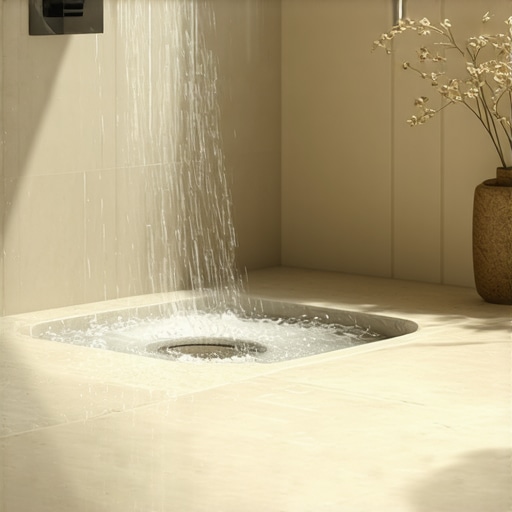
One morning, I stepped into my shower, only to be greeted by a tiny pond of water pooling at the far end. It wasn’t a one-time thing; this puddle turned into a daily nuisance. Frustration welled up as I realized my bathroom’s flooring was gradually being compromised, and I had no idea why water just wouldn’t drain properly. That lightbulb moment made me dig deeper, and I discovered something surprisingly simple—sloping issues in the shower floor that can be fixed with specific, proven techniques.
Why Proper Shower Slope Matters More Than You Think
If your shower isn’t sloped correctly, you’re not just dealing with an annoying puddle; you’re risking long-term water damage, mold growth, and costly repairs. According to home renovation experts, poor shower slopes are a leading cause of leaks and bathroom refurbishments in 2026. So, making sure your shower floor has the right pitch isn’t just about aesthetics—it’s about protecting your home. Have you ever faced water pooling despite a seemingly new shower? If yes, you’re not alone, and fixing this can save you a ton of headaches down the road.
Is a Slight Slope Really That Important?
Early on, I made the mistake of thinking small variations in slope wouldn’t make much difference. How wrong I was. Upgrading my knowledge on shower slopes revealed how crucial even an inch of error can be. A well-designed slope ensures water flows seamlessly toward the drain, preventing buildup. If you’re tired of mopping up puddles after every shower, it’s time to learn about the key fixes that can make a real difference. Keep reading, and I’ll walk you through the top three methods to get that perfect pitch—your shower (and your bathroom’s health) will thank you.
Assess the Current Slope and Prepare the Surface
Start by removing any existing tiles or flooring to expose the subfloor. Use a level or a straightedge to identify areas where water isn’t draining properly; this will often reveal low spots or uneven surfaces. I once used a long spirit level across my shower base and noticed the water stalled around a specific corner, indicating a slope issue. Clean the surface thoroughly, removing debris or old adhesive, to ensure a solid base for corrections.
Build a New Sloped Base with Foam or Mud Bed
Applying a Foam Shower Pan for Quick Fixes
If your shower pan is simple and just needs a slight adjustment, pour a liquid membrane or apply a foam-form shower pan liner that can be shaped to create the correct pitch. Secure it firmly, ensuring it slopes towards the drain with a minimum of 1/4 inch per foot. This method is like customizing a foam mattress; it conforms to your needs and cures quickly. I once repaired a shower with a foam kit that set within hours, saving a costly rebuild.
Pouring a Mud Bed for Long-Term Stability
For more permanent correction, mix a sand-cement mortar designed for shower bases. Spread it over the existing surface in a 1/4-inch-per-foot slope, guided by laser levels or string lines. Carefully shape the edge to meet the drain, ensuring a continuous flow toward it. Carefully trowel the surface smooth, like sculpting clay, to facilitate water runoff. When I fixed my bathroom, I used a laser level to verify the slope, and the difference was immediately noticeable—the puddles disappeared, and water drained swiftly.
Install Waterproofing and Seal the Edges
After adjusting the slope, apply a waterproof membrane over the entire surface, extending it up the walls. Proper waterproofing is crucial to prevent leaks; consider using a liquid membrane that bonds well with your mortar or foam. Seal all joints and edges with silicone or specialized sealant to prevent water ingress behind tiles or base materials. When I waterproofed my shower, I paid close attention to the drain flange area, ensuring a tight seal that prevented future leaks.
Replace Tiles or Flooring and Test the Drainage
Finally, install the tiles or flooring material on top of your corrected surface, making sure to leave a slight gap around the drain for expansion. Once everything is set, run a thorough water test to confirm that water flows directly toward the drain without pooling. I filled my shower with water and observed how quickly it drained, making adjustments if necessary. This real-world test ensures your repair is both functional and durable.
When it comes to **home renovations**, many assume that following the standard steps guarantees a flawless finish. However, a subtle yet critical nuance often trips up even seasoned DIYers and professionals alike: the importance of **precise, level surfaces and proper preparation**. **Most common myths**, like “a little gap or uneven joint isn’t a big deal,” can lead to long-term issues such as gaps, mold, or water leaks. In my experience, it’s the small, overlooked adjustments during installation that make the biggest difference in durability and aesthetic appeal.
**One frequent mistake** is underestimating the significance of **slope and levelness**, especially in flooring and showers. For example, during a recent shower renovation, I noticed many installations fail not because of poor materials but because installers neglect meticulous surface prep. This results in water pooling behind tiles, leading to leaks and mold growth—problems that could have been prevented with detailed surface assessment.
Have you ever fallen into this trap? Let me know in the comments.
### Why Your Carpet Might Not Last and How to Fix It
One misconception is that a **high-quality carpet** can hide installation flaws, but in reality, improper padding, stretching, or edge finishing can cause ripples or seams to fail prematurely. The **secret** is ensuring the **padding is appropriately thick**—not too soft or too thin—and **stretching the carpet tightly** using professional tools. Slacking or improper seaming leads to **bubbles or wrinkles**, which appear minor but drastically shorten the carpet’s lifespan. For expert tips on flawless carpet installs, check out [this guide](https://tilecraftsmens.com/expert-carpet-installation-guides-for-a-flawless-home-finish-today).
### Baseboards: The Small Details That Elevate Your Design
Many focus on choosing trendy styles but overlook that **improperly scribed and cut baseboards** can create unappealing gaps and undermine your entire aesthetic. A common myth is that **caulking alone** can hide uneven walls; instead, accurate scribing with a **scribing tool** ensures a seamless fit, especially on irregular walls. Additionally, **copping corners** versus miters impacts how tight the joint appears. Recent trend reports emphasize that **precision in cuts and scribing** makes a substantial difference, as highlighted in [this trend update](https://tilecraftsmens.com/baseboard-trends-in-2025-fresh-styles-for-every-room).
### Flooring: Avoid These Mistakes That Kill Longevity
A **major trap** in flooring installation involves **not acclimating materials** properly or neglecting expansion gaps. Many assume that **placing tiles or planks directly** is fine, but failure to allow materials to adjust to environmental conditions causes **bucking or cracking** later on. Moreover, **failing to leave a gap** during installation prevents expansion, leading to buckling—an expensive fix. External research, like the study in the *Journal of Flooring Science*, emphasizes the importance of **temperature and humidity management** during installation for longevity. For comprehensive tips, see [this resource](https://tilecraftsmens.com/expert-flooring-installation-tips-for-lasting-results).
### The Shower Dilemma: Sealing the Deal
Many homeowners believe that applying **silicone sealant** is enough to prevent leaks around shower bases, but the **real trick** lies in **proper waterproofing and slope**. Failing to install a **proper waterproof membrane** or neglecting to **verify slope** often results in water infiltration behind tiles, causing rot and mold. An advanced mistake is **skipping the drain flange sealing**, which can cause leaks from within the substructure. For expert advice on waterproofing, visit [this article](https://tilecraftsmens.com/stop-leaky-showers-4-hidden-tile-waterproofing-fixes-2026).
To avoid these pitfalls, always remember that **small adjustments during installation**—like careful surface prep, correct slope, and precise cuts—are the backbone of **lasting quality**. The devil truly is in the details. If you’re considering your next renovation, exploring these nuances can save you headaches and improve results. Want to dive deeper? Reach out through [our contact page](https://tilecraftsmens.com/contact-us), and let’s make your project a success.
Tools I Recommend for Long-Lasting Home Upgrades
Achieving professional-quality results in carpet installation, flooring, or shower renovations relies heavily on the right tools. One indispensable item in my toolkit is a laser level, specifically the Bosch GLL3-330CG. I prefer it because of its accuracy and ability to project multiple lines simultaneously, which is crucial for ensuring that floors and walls are perfectly level—an often overlooked detail that can save you from costly fixes down the line.
Beyond leveling tools, a high-quality corner scribing tool like the Nibco 72514 helps me get those tight, consistent joints, especially when working with uneven walls or intricate baseboard cuts. For applying waterproof membranes around showers, I recommend the Mapei Mapelastic liquid membrane; its ease of application and durability make it a staple in my projects, providing reliable waterproofing that prevents leaks and mold growth.
Maintaining Your Installations Over Time
Maintenance is key to maximizing the lifespan of your floors, baseboards, and showers. Regular inspections for cracks, gaps, or signs of water infiltration can preempt major issues. For floors, a quick sweep and damp mop weekly prevent dirt buildup that can cause wear. For showers, promptly fixing any sealant cracks with a commercial silicone like GE Silicone II keeps water from seeping behind tiles. Baseboards benefit from periodic cleaning and touches of paint or sealant in areas prone to moisture or damage, maintaining their aesthetic appeal and function.
Where Do I Start with Long-Term Results?
Begin by investing in quality tools and learning routine maintenance practices. For example, I always test my shower slope after installation with a simple bucket test—just pour water and observe the drain. If you want your investments to last, consider scheduling seasonal inspections to catch issues early. Over time, adjusting your cleaning and minor repairs according to the environment—like drying out moisture-prone areas—can dramatically extend the life of your home upgrades.
What Trends Are Shaping Maintenance and Tools in 2026?
Looking ahead, I see smart sensors becoming common in home systems—detecting leaks or moisture in real-time and alerting homeowners immediately. Incorporating devices like smart moisture sensors into bathrooms and floors can prevent severe water damage before it starts. Additionally, advancements in waterproofing materials and tools, like self-healing membranes, are streamlining maintenance and reducing long-term costs.
To keep your installations working seamlessly, I recommend you try integrating a simple yet powerful tip: regularly applying a high-quality sealant around shower edges and baseboards. This proactive step prevents moisture infiltration and keeps your home looking pristine for years to come. Remember, the key lies not only in the initial installation but also in diligent, ongoing maintenance—your best defense against costly repairs down the road. For more in-depth strategies, check out our comprehensive guide to durable flooring installation.
The Hardest Lesson I Learned About Carpet, Baseboards, and Showers
One of the most striking realizations I had was that even the smallest overlooked detail, like uneven wall edges or tiny slope inaccuracies, could compromise an entire renovation. Early in my journey, I underestimated the importance of meticulous surface prep, leading to adjustments down the line that could have been avoided. Now, I know that patience during the initial stages is what guarantees longevity and beauty in home upgrades.
Tools That Made a Difference in My Projects
Investing in quality tools transformed my results. Specifically, a laser level such as the Bosch GLL3-330CG became my go-to for ensuring perfect alignment, while an accurate scribing tool like the Nibco 72514 helped me achieve seamless baseboard joints. These tools might seem simple, but they are treasures when aiming for professional, lasting details. For waterproofing, the Mapei Mapelastic ensures durability and peace of mind.
Real Impact of Proper Preparation and Maintenance
The true value comes not just in the initial fix but in ongoing care. Regular inspections, prompt sealing of gaps, and routine cleaning extend the lifespan of your upgrades. I learned that a small investment in regular checks, like testing a shower drain or inspecting baseboards, prevents costly repairs later. Technologies like smart moisture sensors are emerging as game-changers, alerting homeowners to issues before they escalate, emphasizing that smart maintenance is the future of home durability.
Insider Wisdom for Lasting Results in Home Upgrades
- Patience is your best tool—taking the time to level surfaces properly ensures long-term success rather than quick fixes that decay over time.
- Small details matter more than you think—from proper slope in showers to tight joints in baseboards, precision makes all the difference.
- Invest in quality tools and materials—favorites like laser levels and durable waterproof membranes pay dividends in durability and appearance.
- Embrace ongoing learning—following trusted guides and staying updated with trend reports can help you stay ahead in home improvement.
Where To Elevate Your Skills Next
If you’re eager to elevate your home renovation game, start by exploring the expert tips for durable flooring installation. Think about upgrading your toolkit with a laser level or a scribing tool, and don’t forget the importance of routine maintenance, which can significantly extend the life of your work. Remember, consistency and attention to detail are your best allies. Ready to build a home that reflects your dedication? Take the first step today—your future self will thank you.