

I remember the moment vividly — grout lines cracking, tiles flexing underfoot, and that sinking feeling in my stomach. It was after a long weekend of sweating over a new kitchen remodel, only to realize that my beautiful large tiles were not so beautiful anymore. I had overlooked a crucial detail: the uneven subfloor lurking beneath, causing all the chaos. That lightbulb moment made me realize that addressing subfloor imperfections isn’t just about aesthetics; it’s about enduring stability and peace of mind.
Why Fixing the Subfloor Matters When Installing Large Tile
If you’ve ever poured your time, money, and enthusiasm into a tile project, you know a smooth, level substrate is the foundation of success. Unfortunately, many homeowners and DIYers overlook this critical step, hoping that the tile adhesive will hide minor imperfections. But with large-format tiles, even tiny undulations become glaring issues. These issues can lead to cracked tiles, uneven surfaces, or worse — costly re-dos.
Understanding that your subfloor needs to be just right can make or break your project. A flawed base doesn’t just cause aesthetic hiccups; it can compromise the integrity of your entire installation. For large tiles, the weight and size amplify any unevenness, making the need for a diligent fix even more pressing. If you’re tired of dealing with cracked grout lines or wobbly tiles, you’re in good company. Trust me, I’ve been there — and early mistakes like ignoring subfloor prep can haunt you long-term.
Is the High-Low Technique Really Necessary? My Honest Take
I’ll admit, I once thought I could cut corners and skip some of the more tedious subfloor prep steps. I naively believed that spot-leveling was enough, and boy, did I pay the price. Early on, I made the mistake of thinking that a little sanding here and a quick layer of leveling compound there would do the trick. It wasn’t until I confronted cracked tiles and uneven grout lines that I realized the importance of a thorough high-low fix.
Research supports this approach—according to a study by flooring experts, uneven subfloors are responsible for nearly 60% of tile failure issues. So, the question isn’t whether to fix the high-low spots but when. Addressing them upfront guarantees a more durable, long-lasting large tile installation that withstands the test of time.
Ready to tackle your subfloor problems head-on? Let’s dive into the tried-and-true methods that will elevate your project and save you headaches down the road. Whether you’re tackling a bathroom renovation or a kitchen upgrade, these tips will make the difference between a lasting, flawless floor and a frustrating redo.
Assessing the Subfloor’s Condition
Begin by testing your subfloor for high or low spots using a long level or straightedge. Place it across different areas, especially where large tiles will be installed. If you find gaps or unevenness exceeding 1/8 inch, prepare for repairs. I once sketched out my measurements on a piece of drywall, which helped me visualize where more work was needed. Recognizing these problem spots early saves time and hassle later.
Preparing for High-Low Spot Correction
Gather Necessary Tools
Equip yourself with a circular saw, floor leveling compound, a sturdy trowel, a drill, and shims or shingle materials such as roofing shingles or plywood scraps for adjustments. Having the right tools ensures efficient and accurate leveling.
Addressing Low Areas
For depressions, clean the area thoroughly, then pour a self-leveling compound, spreading it with a trowel. Use a straightedge to ensure it remains flush with surrounding surface. I once had a stubborn low spot under a bathroom section; after pouring leveling compound and using a level, I waited for it to cure before proceeding. The result was a smooth substrate ready for tile.
Correcting High Spots
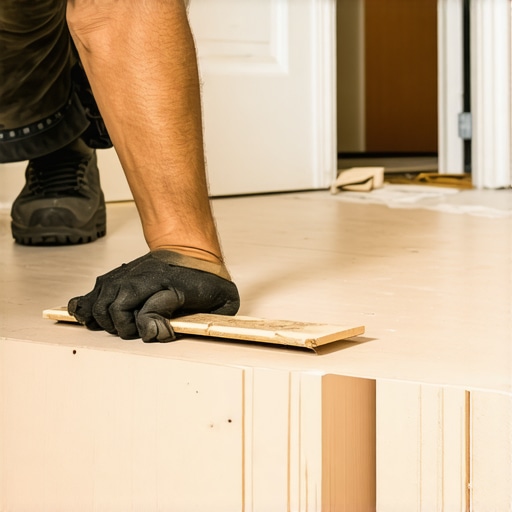
High spots can be leveled down with a grinder or sander. For minor elevations, carefully sand down the high point until it matches adjacent areas. For larger discrepancies, insert shims—these are thin pieces of plywood or roofing shingles—under the subfloor or under the underlayment to bring the surface to grade. I recall shimming under a warped plywood sheet with roofing shingles to achieve a flat base for tiles. This method is simple yet effective.
Implementing Shimming for Wavy Surfaces
Shims are your best friends when dealing with uneven subfloors. Score shingle or plywood pieces into thin strips, then slide them into gaps or under edges to adjust height. Secure shims with construction adhesive or screws if necessary. My experience involved gently tapping shims into place to correct a wavy basement slab before laying tile. Once secured, the surface was perfectly flat.
Creating a Solid Base with Underlayment
After leveling, consider installing a cement backer board or an anti-fracture membrane to create a strong, stable surface. This step is particularly important for large tiles, as it helps distribute weight evenly and prevents future cracks. I always recommend accessing detailed guides on [your guide to durable flooring installation](https://tilecraftsmens.com/your-guide-to-durable-flooring-installation-for-a-stylish-home) to fine-tune your preparation process.
Final Check Before Tile Laying
Before committing to adhesive, double-check the entire surface with a straightedge or laser level. Identify any spots that still vary more than 1/8 inch and address them immediately. Remember, a perfectly prepared subfloor may take extra time, but it prevents costly mistakes down the line. Testing the surface thoroughly is the last step to ensure success.
By systematically assessing and correcting your subfloor’s imperfections, you’ll lay a foundation that guarantees large tiles look impeccable and last for years. Precision now means fewer headaches later.
When it comes to home improvement, many homeowners fall into common traps because they overlook overlooked subtleties that can make or break the final result. Let’s cut through the myths and dig into the nuanced mistakes that even experienced DIYers sometimes make, especially in areas like baseboards, carpet installation, showers, and flooring. Recognizing these can save you time, money, and frustration.
One widespread misconception is that baseboard installation is just about cutting angles and nailing them in place. Everyone says you should miter corners perfectly, but in reality, the real challenge is accounting for wall imperfections and wall material flexibility. The best-kept secret is to use flexible caulk in conjunction with strategic shimming—this allows your baseboards to sit flush against uneven walls, creating a more polished look. For detailed tips on elevating your baseboard game, check out [baseboards makeover](https://tilecraftsmens.com/baseboards-makeover-elevate-your-interior-with-simple-updates).
In carpet installation, many believe that stretching is a mere ritual to avoid wrinkles. However, the critical nuance lies in understanding the interaction between padding quality and stretching technique. Using low-quality padding can cause ripples and lumps over time, even if you stretch correctly. Moreover, the method of stretching matters: power stretching provides better consistency than manual hand-stretching, especially on larger areas. A common mistake is to neglect the importance of proper tack strips and seam sealing—errors that often lead to seams becoming visible or the carpet pulling away from edges. If you want flawless results, explore advanced techniques at [carpet install secrets](https://tilecraftsmens.com/carpet-install-secrets-achieving-flawless-results-every-time).
Showers are a different beast altogether. Many assume that waterproofing is a one-and-done step before tiling, but the devil is in the details. The commonly missed nuance is the importance of properly sealing small cracks and corners, which are hotspots for leaks. For example, applying modified thinset and a continuous bead of silicone sealant at junctions between shower walls and floors can prevent leaks that damage walls and ceilings below. Read more on creating a spa-like shower at [luxury shower ideas](https://tilecraftsmens.com/shower-renovation-ideas-modern-designs-for-a-luxury-feel).
Advanced installers know that moisture management isn’t just about initial waterproofing. Installing a moisture barrier behind the cement board and ensuring proper slope grading are subtle yet profound factors. Ignoring these can lead to mold or tile failure down the line. According to experts, such attention to detail reduces warranty claims and extends the lifespan of your shower significantly.
When installing flooring, the typical advice revolves around leveling and layout. But the nuanced mistake lies in not considering expansion gaps and temperature fluctuations. For engineered wood, for instance, leaving an adequate gap around the perimeter for expansion can prevent buckling later. Similarly, understanding the nuances of subfloor preparation—such as removing existing adhesives or debris—directly influences durability and finish quality. For comprehensive guidance, review [flooring installation tips](https://tilecraftsmens.com/transform-your-home-expert-flooring-installation-tips-for-2025).
In summary, mastering these subtle details transforms a good project into a truly professional-looking outcome. Whether it’s shim placement behind baseboards or sealing tiny shower cracks, these nuances are often the difference between lasting success and ongoing repairs. Have you ever fallen into this trap? Let me know in the comments and share your experiences.
Keeping it Working: Essential Tools and Maintenance Tips
Investing in quality tools is the backbone of durable, professional-looking home renovations. For flooring installations, I personally swear by a high-quality carbide-tipped circular saw, which provides clean, precise cuts and handles tough materials like cement backerboards with ease. Pair it with a guide rail to ensure straight, accurate cuts every time, reducing waste and rework. For levelling uneven subfloors, a cordless angle grinder equipped with diamond blades is indispensable for grinding down high spots efficiently without creating the mess of traditional tools.
Maintaining these tools is just as crucial as owning them. Regularly cleaning dust and debris, especially from saw blades and grinding wheels, prevents overheating and dulling. Lubricate moving parts with manufacturer-approved oils to keep them responsive and extend their lifespan. For power tools, a simple routine of inspecting cords and switches can avert safety hazards and downtime.
What are the best ways to keep your tools functional over time?
Storing tools in a dry, organized space prevents rust and damage. Using silica gel packets or desiccant DewEze pads can absorb moisture inside toolboxes. Keep blades sharp with regular honing—dull blades strain your motor and compromise cuts. Additionally, many DIYers overlook the importance of calibration; regularly check the accuracy of laser levels or moisture meters against a known standard to ensure precise results during installation.
Modern moisture meters, like the Tramex CME4, have advanced sensors that provide instant, accurate readings of substrate moisture content—crucial for preventing future tile cracks or adhesive failures. Staying updated with the latest modeling ensures you’re working with reliable data, protecting your investment in materials and labor. As trends shift toward smart tools, integrating Bluetooth-enabled devices allows you to log maintenance schedules and set reminders, making long-term tool management effortless and more efficient.
Future trends
Looking ahead, I predict growing adoption of cordless, battery-operated tools with extended run times and rapid charging capabilities. Innovations like AI-powered calibration and integrated diagnostics will make maintenance even more straightforward. These advancements will empower DIYers and professionals alike to keep their equipment in prime condition, resulting in smoother projects and longer-lasting results.
How do I maintain my home improvement equipment to ensure longevity?
Consistent cleaning, proper storage, and timely calibration are key to keeping your tools reliable. Remember, investing a little time in tool care today can save you significant headaches and costs down the line. To give your projects an extra edge, try implementing a routine maintenance schedule using SMART tool management apps or reminder systems. This proactive approach guarantees your tools will perform optimally when you need them most, making every project a success. For more detailed tech insights, check out this comprehensive guide to durable flooring.
Start by selecting a versatile, handheld oscillating tool with various attachments—perfect for detail work around moldings and tight corners. These tools are especially handy when maintaining grout lines or re-sealing shower niches, which require precision to keep water-tight. Regularly inspect and replace worn-out blades or sanding pads to keep cuts clean and surfaces smooth. Remember, the more attentive you are to your equipment, the better your finished results will be, and your long-term costs will decrease as a result.
Embracing these maintenance secrets isn’t just about preserving tools—it’s about ensuring your home improvements last for years without costly repairs or replacements. Don’t wait for a tool to fail before taking action—adopt a proactive maintenance routine today and experience the difference it makes in your craftsmanship.
What Busts My Confidence About Baseboards and Showers
- I once thought precision was enough in wall corners, but I overlooked how wall imperfections make even mitered joints appear off. That lightbulb moment made me realize that prepping surfaces thoroughly is as crucial as the final cut, especially on wavy walls or uneven ceilings.
- My biggest mistake in bathroom showers was ignoring the tiny cracks at junctions, assuming waterproofing alone would suffice. Learning to seal every seam meticulously opened my eyes to how small details prevent big water damage later on.
- In flooring, I used to settle for leveling with a quick pour of compound, only to see it crack after a few months. It showed me that patience in subfloor prep—like thorough grinding and shimming—is the secret to long-lasting floors that don’t squeak or crack.
- Attempting quick fixes to hide uneven baseboards often resulted in gaps or crooked lines. That taught me that shimming smartly and taking my time yields seamless, professional-looking results that last years without touch-ups.
- Finally, I learned that tools are only as good as their maintenance. Dull blades or uncalibrated devices led to sloppy cuts and inaccurate leveling, reminding me to prioritize regular inspection and care for my equipment—saving time and frustration.