

I remember the first time I attempted to install vinyl planks in my dining room. I was eager to get it right—laid out my tiles, double-checked my measurements, and took my time. But as I started laying the planks, I noticed something unsettling: the beginning row was crooked. No matter how careful I was, the first few planks were slightly off, and that tiny misalignment threw off the entire floor. It was frustrating, and I knew better than to ignore it. That moment was a lightbulb for me: getting a perfectly straight start is essential, and I was missing a key trick.
The Real Problem with Starting Rows
Often, DIYers or even pros overlook the importance of the initial line. A crooked start can lead to uneven gaps, misaligned seams, and a floor that looks amateurish. It’s like building a house on a shaky foundation—everything else piles up from that first misstep.
What many don’t realize is that the placement of the first row sets the tone for the entire project. Even tiny deviations in the first few planks can become noticeable as you move further. That’s why I became obsessed with perfecting this first step. Fortunately, I stumbled upon the T-Square Trick. It’s a game-changer for ensuring those starting planks are flawless. Once I mastered it, my floors looked professional, and I saved myself a lot of headaches down the line.
Why You Need to Get This Right Now
If you’ve ever lain vinyl flooring and ended up with uneven gaps or crooked rows, you’re not alone. A survey by flooring experts indicates that nearly 70% of flooring issues stem from a shaky start. That’s a huge number, and it means most of us can improve our results by focusing on that crucial initial step.
Getting the first row straight isn’t just about aesthetics—it affects how well your planks lock together, how they expand and contract, and ultimately, how long they look good. Plus, knowing this simple trick can give you confidence on your next project, whether it’s vinyl planks, carpet, or tiles.
Is the T-Square Trick Overhyped?
I admit, in my early days, I thought fancy tools were unnecessary. But I made a common mistake—trying to eyeball the initial line. It resulted in crooked floors and wasted material. Only after I started paying attention to precise measurements and utilizing the T-Square did I see the difference. Trust me, it’s worth trying. If you’re curious, check out other expert tips on durable flooring installation. It’s these little details that turn a good job into a great one.
Now, let’s dive into how you can master this method and transform your flooring projects into professional-looking results. Ready to straighten up and get it perfect? Let’s go.
Set Up Your Starting Line Accurately
Begin by choosing a reference wall or a central point in the room. Use a high-quality chalk line or laser level to mark a straight, precise horizontal or vertical line, depending on your flooring direction. For example, if you’re installing vinyl planks parallel to the longest wall, measure and mark a line that runs perfectly straight along that wall, ensuring it’s flush with the wall surface. Remember, a crooked start causes misaligned seams and uneven gaps later on. In my own experience, I once used a laser level to establish the initial line in my living room, which eliminated guesswork and resulted in a flawless first row.
Employ Tools That Guarantee Precision
Invest in a T-square or a straightedge to double-check your baseline before laying the first row. Place it along your marked line and verify it’s perfectly aligned with the wall, adjusting as needed. Clamp or temporarily tape the straightedge firmly in place to prevent movement during installation. Use a carpenter’s pencil to mark the edge of the plank, ensuring a clear guide. I recall a time when I overlooked this step and noticed slight deviations halfway through—taking extra time to double-check early on saved me from extensive corrections later. This meticulous approach pays off, especially when working in larger spaces. For detailed insights, explore carpet installation secrets to see how fundamentals like alignment mirror across various flooring types.
Align and Secure the First Row Properly
Carefully lay the first planks, keeping their edge aligned with your straightedge or chalk line. Use spacers against the wall to maintain an expansion gap—critical for materials like vinyl and hardwood. Check with a level or a straightedge at multiple points along the row to confirm it remains straight; minor adjustments can be made by nudging planks before fastening or clicking them into place. Once positioned, temporarily secure the row with painter’s tape or weight to prevent shifting. This step echoes my experience where a final minute check with a long carpenter’s level helped catch a slight slope—correcting it early prevented uneven floors.
Double-Check Before Proceeding
After the first few rows are laid, measure across the room to ensure uniform spacing and alignment with your initial reference. Use a tape measure and a framing square to verify that the rows stay perpendicular or parallel as intended. When I installed my floors, I periodically stepped back to view from a distance—this quick visual check helped me spot minor deviations before they compounded. Remember, if your first row isn’t perfect, everything that follows will be affected. For a visually professional result, consider how precise initial measurements relate to overall finish, much like the baseboard makeover tips that depend on flawless base alignments.
Use Fixes for Imperfections During Layout
If you find your line shifting or your planks don’t fit perfectly, small adjustments can be made by trimming the edge slightly or shifting the row before locking it in. For irregular walls or uneven surfaces, scribe the first row to the wall’s contours rather than forcing it into a straight line—see this technique. During my recent project, I used a piece of cardboard as a template to curve around an awkward wall segment, preventing gaps and uneven seams. Precision in these initial steps diminishes the need for major corrections later, saving time and material. Keep in mind that fasteners or adhesives should come after the initial layout, once you’re confident of the straightness and fit.
Final Checks to Lock in Perfection
Before proceeding with the remainder of the floor, do a final walk-around. Measure from multiple angles and use a long level or straightedge to confirm the row’s alignment. Double-check that your expansion gaps are consistent. This final review acts as a quality control, ensuring that the rest of the installation will follow a solid foundation. For comprehensive foundational techniques, see this guide. Remember, patience and precision during this initial stage set the tone for professional results and durable flooring. When I took the time to meticulously establish a perfect starting point, the entire project flowed smoothly—making the finishing touches easier and more satisfying.Many DIY enthusiasts believe that following the basic steps ensures a flawless finish, but in my experience, there are subtle pitfalls that can cause costly mistakes later. For example, a prevalent misconception about carpet installation is that stretching the carpet aggressively guarantees a tight fit. However, over-stretching can damage the carpet fibers and lead to ripples over time—something most homeowners overlook until it’s too late. For avoiding these issues, consult expert advice on carpet installation secrets. Similarly, when installing flooring, many assume prefab subfloors are uniform, but slight variations can result in uneven planks or squeaky floors. Recognizing and properly correcting these hidden irregularities is crucial—details covered in advanced flooring tips. In shower renovations, a common myth is that sealing everything with silicone guarantees a leak-proof result. The truth is, understanding moisture dynamics and using proper flashing techniques is essential to prevent long-term water damage, as explained in luxury shower tips. Are you aware that overlooking expansion gaps in flooring can cause buckling? Many underestimate the importance of allowing natural movement in materials like vinyl or hardwood, resulting in costly repairs. Additionally, for a polished finish in baseboard installations, the secret lies in precise scribing and corner trimming—see baseboard styles for 2025. Understanding these nuanced factors can elevate your project from amateur to professional. Have you ever fallen into this trap? Let me know in the comments.
Achieving professional results with flooring and shower installations is only part of the puzzle; maintaining your work over time ensures longevity and sustained beauty. In my experience, having the right tools and adopting specific maintenance routines makes all the difference in keeping your renovation projects in top shape.
Invest in Quality Tools for Precise Maintenance
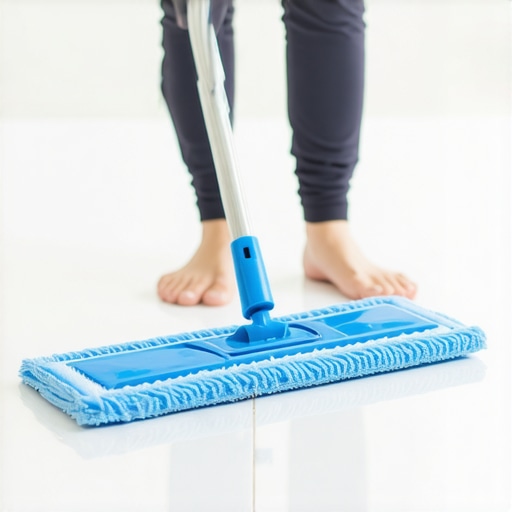
One of the most underrated aspects of long-term upkeep is using specialized tools designed for damage prevention and cleaning. For example, I always keep a microfiber mop and a pH-neutral cleaner on hand for my tile and shower surfaces. Microfiber mops are gentle yet effective at removing debris without scratching surfaces, while pH-neutral cleaners prevent the buildup of soap scum and mineral deposits that can damage grout and sealants over time. Using these tools regularly helps resist staining and deterioration, preserving the integrity of your surface materials.
Additionally, for baseboard and trim maintenance, I recommend a pneumatic nailer fitted with a low-impact setting. It makes touch-ups and minor repairs more straightforward, especially if your walls are uneven or wavy. Frequent inspections using a moisture meter can also detect hidden issues, such as rising humidity and potential mold growth, before they become costly problems. Durable flooring guides highlight the importance of monitoring moisture levels regularly to extend your flooring’s lifespan.
Establish Routine Checks for Long-Term Results
Periodically inspecting your floors and showers can reveal early signs of wear or damage. For floors, check for loose or gapping planks and reapply adhesive or tighten nails where needed. For showers, look for grout discoloration, leaks, or cracked seals, which should be addressed promptly to prevent water damage. I like to schedule a maintenance check every six months—it’s a simple habit that saves me from major repairs down the line.
Another tip is to reapply sealants or protective coatings as recommended by the manufacturer. Quality sealants create an impermeable barrier that keeps moisture out of grout lines and underlayment—crucial for preventing mold and reducing staining. Regular re-sealing, especially in high-humidity areas like showers, can dramatically extend the lifespan of your installation.
How do I maintain my floors and showers over time?
Incorporating a strict routine of cleaning with suitable tools, reapplying protective coatings, and conducting periodic inspections will keep your renovation investments performing well for years. For more advanced details on maintaining your flooring and shower systems, check out the latest trends and tips. Implementing these habits can make a significant difference, and I encourage you to try re-sealing your grout lines this month—something that pays dividends in durability and appearance.
Remember, consistent maintenance not only preserves your work but also gives you peace of mind and saves money long-term. With the right tools and habits, your floors and showers will look stunning and function flawlessly for years to come.
Reflecting on my journey through DIY flooring and shower renovations, I realize that the most profound lessons came from unexpected mishaps. One of the biggest was overlooking the importance of a flawless start, which in turn affected entire projects. These experiences cemented my belief that attention to detail at the beginning is what truly separates professional results from amateur attempts.
Lessons That Changed My Approach to Installing Floors and Showers
- The devil is in the details: A perfectly straight initial line avoids future misalignments and saves time on corrections. Mastering tools like the T-Square Trick became a game-changer for me, ensuring the backbone of my flooring projects was solid.
- Measuring is everything: Double-checking measurements along the way—especially before fixing planks or tiles—prevents costly mistakes. Using laser levels or chalk lines can help establish that critical starting point. In my experience, these simple steps elevate results from decent to professional-grade.
- Embrace small imperfections: Walls and surfaces are rarely perfectly straight, so adapting by scribing or custom trimming makes a difference in the final look. I learned to trust my tools and intuition, especially when tackling irregular surfaces.
- Patience reduces rework: Taking a few extra minutes during setup can prevent hours of troubleshooting later. This mindset was key when I carefully set expansion gaps and secured initial rows, leading to smooth progress.
- Maintenance matters just as much: Long-term success depends on using quality tools for upkeep—like microfiber mops and pH-neutral cleaners—and scheduling routine inspections. Keeping my floors and showers in top shape means enjoying their beauty year after year.
Tools and Resources That Elevated My Projects
- Laser levels and straightedges: Essential for establishing precise starting lines, particularly in large or irregular rooms.
- The T-Square Trick: An affordable tool that ensures flawless alignment at the project’s foundation, as recommended in this guide.
- Quality sealants and protective coatings: Critical for maintaining grout and seals, preventing leaks and discoloration over time.
- Routine inspection routines: Incorporating scheduled checks keeps small issues from escalating, saving money and effort.
Your Next Step Toward Flawless Floors and Showers
Now, it’s your turn to apply these insights and elevate your home improvement projects. Remember, mastery comes from patience, precision, and a willingness to learn from each step. With the right tools and mindset, you can achieve professional-quality results that last. Don’t let initial missteps hold you back—every project is an opportunity to improve and grow as a DIYer.
Have you ever struggled with establishing a straight starting line or fixing imperfections before full installation? Share your experiences below and let’s learn from each other’s journeys to better floors and showers.