
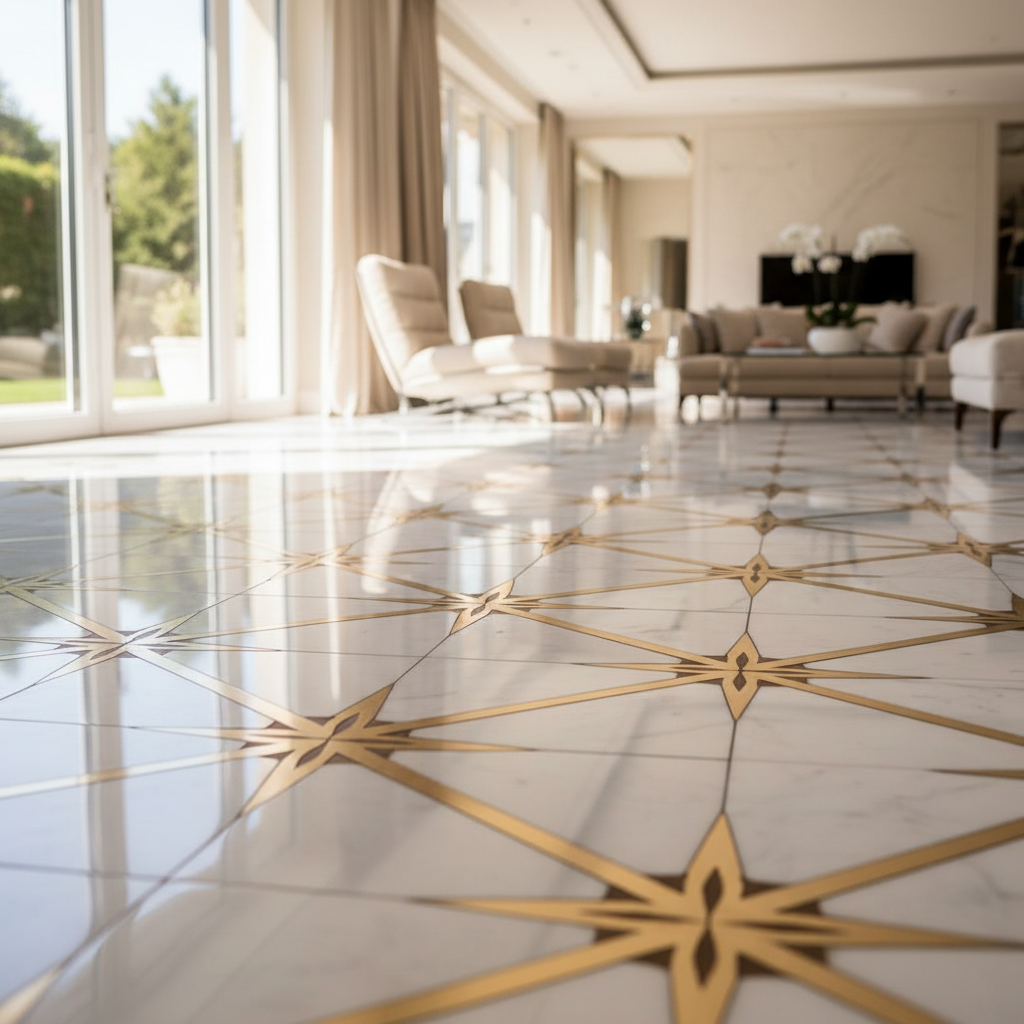
Architectural Tile Craftsmanship That Eliminates Lippage and Failing Grout
Masterful Tile Craftsmanship for Extraordinary Spaces
We document the exact techniques required for high-end tile installations. From perfectly mitered shower niches to 1/16-inch epoxy grout joints, explore the standards that separate permanent art from temporary flooring.
The Anatomy of a Flawless Tile Installation

📏 Precision Subfloor Prep
A flat floor dictates the final aesthetic. We detail the exact self-leveling underlayment ratios and grinding techniques required to achieve a 1/8-inch variance over 10 feet.
🔍 Micro-Grout Joint Mastery
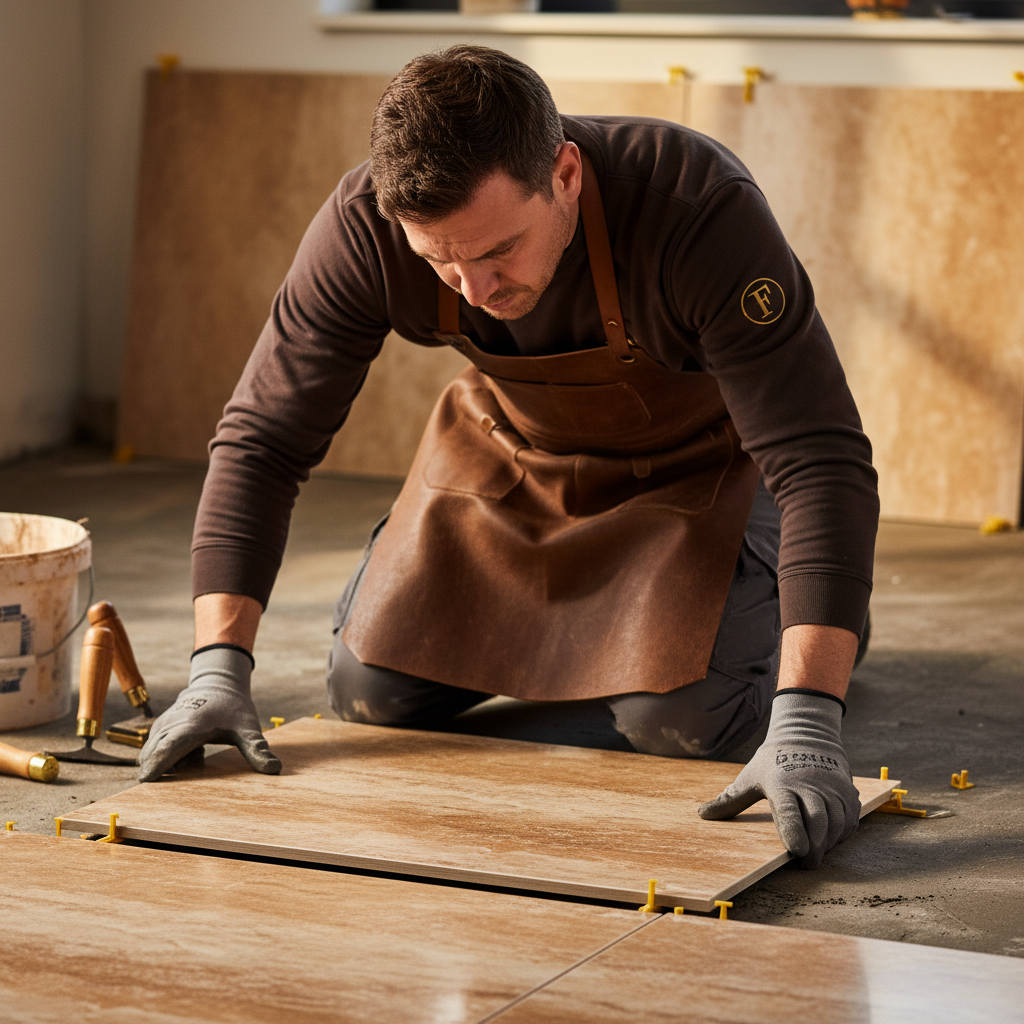
Large-format porcelain demands exact spacing. Learn how artisans execute 1/16-inch joints using wedge leveling systems without compromising the structural integrity of the mortar bed.
💧 Waterproofing Architecture
Water damage destroys standard installations within 36 months. We break down the application of uncoupling membranes and topical sheet waterproofing for showers that outlast the building.
📐 Custom Mitered Edges
Metal trim pieces interrupt the visual flow of luxury stone. We showcase the diamond-blade mitering process that creates sharp, continuous veining on outside corners and shower niches.
🏢 Long-Term Asset Protection
Drawing from 12 years in property management, Rochelle Pausa highlights the installation failures that cost owners thousands. Specify the right epoxy grouts and movement joints to protect your investment.
Documented Craftsmanship Standards
Luxury Condo Renovation, Miami FL
Before: Contractor proposed standard cement board and 1/4-inch grout lines for 24×48 porcelain.
After: Specified a Schluter-Ditra uncoupling system and 1/16-inch epoxy joints, resulting in zero cracked tiles over 4 years.
⏱ 14-day installation
Boutique Hotel Lobby, Chicago IL
Before: Existing marble floor suffered from severe lippage, causing a tripping hazard and daily maintenance issues.
After: Guided the specification of a poured self-leveling underlayment, achieving a perfectly planar surface across 2,500 square feet.
⏱ 5-day prep phase
High-End Residential Build, Austin TX
Before: Architect plans lacked specific movement joint details for a sun-exposed 1,200 square foot patio.
After: Implemented TCNA-standard expansion joints every 8 feet, preventing thermal expansion blowouts during 100-degree summers.
⏱ 30-day observation
Specify High-End Tile Work
1
Audit the Substrate
Before a single tile is cut, assess the concrete slab or joist system. We provide the exact deflection formulas required for natural stone versus ceramic.
2
Define the Layout
Calculate the room center point to avoid sliver cuts at the perimeter. Plan the exact placement of movement joints and transition profiles.
3
Mandate the Materials
Specify the exact modified thinset, uncoupling membrane, and epoxy grout required for the specific tile format and environmental exposure.
Perspectives from the Field
Rochelle’s property management background brings a brutal reality check to tile design. Her breakdown of why our shower niches kept failing led us to mandate epoxy grout and topical waterproofing on all 40 of our units.
Marcus T. — Multi-Family Developer
The extreme close-ups of the mitered corners completely changed what I expect from my installers. I now write 1/16-inch maximum lippage tolerances directly into my subcontracts.
Sarah L. — Custom Home Architect
I thought a 1/4-inch variance in the slab was acceptable until I read the breakdown on large-format porcelain. We spent 3 extra days on floor prep, and the final reflection on the polished stone is absolute glass.
David R. — General Contractor
Most sites just talk about tile trends. This publication actually explains the chemistry of modified thinset and why back-buttering a 24×48 tile is non-negotiable for 95 percent coverage.
Elena K. — Interior Designer
Frequently Asked Questions
Why do my large-format tiles have uneven edges?
That unevenness is called lippage. It occurs when the subfloor is not perfectly flat or the installer fails to use a mechanical wedge leveling system. Industry standards allow for 1/32-inch variance, but master craftsmen aim for zero.
Is cement board enough waterproofing for a custom shower?
Absolutely not. Cement board is water-resistant, meaning it will not disintegrate when wet, but it acts like a sponge and allows moisture to reach the wood studs. You must specify a topical sheet membrane or liquid waterproofing over the board.
Why does epoxy grout cost three times as much to install?
Epoxy grout requires a precise two-part chemical mixture and a strict 45-minute working window before it hardens permanently. The labor involves meticulous washing to prevent a plastic haze on the tile, but it yields a stain-proof, waterproof joint.
How much deflection is acceptable for natural stone floors?
Natural stone requires a much stiffer subfloor than ceramic tile. The joist system must meet a deflection rating of L/720, meaning the floor cannot bend more than 1/720th of the span under a 300-pound live load.
Elevate Your Tile Specifications Today
Stop accepting mediocre installations that fail within 5 years. Access our complete library of architectural tile details, substrate prep formulas, and material specifications.
Written & Reviewed By
Rochelle Pausa
Virtual Assistant Property Management
Rochelle Pausa is a seasoned administrative and project professional with a specialized focus on the flooring and property management sectors. Currently serving as a Project Assistant at GP Flooring Solutions, Rochelle brings a wealth of practical knowledge regarding material selection, project coordination, and the technical requirements of high-quality flooring installations. Her background in property management and administrative support, spanning nearly a decade since 2015, allows her to offer a unique perspective on the intersection of aesthetic design and long-term property maintenance. At tilecraftsmens.com, Rochelle leverages her industry experience to provide readers with authoritative insights into tile selection, installation workflows, and best practices for maintaining durable surfaces. Her career has been defined by a meticulous attention to detail and a commitment to operational excellence within the home improvement and real estate industries. Whether she is discussing the nuances of project timelines or the specifics of flooring materials, her goal is to bridge the gap between complex industry standards and actionable advice for homeowners. Rochelle is deeply passionate about empowering others through clear communication and expert guidance to help them achieve their property goals.
Latest from Our Blog
The ‘Dry-Pack’ Secret for rock-solid shower subbases
I’ll never forget the sound of that first crunch. It was six months after I’d finished a guest bathroom renovation,…
Stop carpet odors with the ‘Baking-Soda’ Vacuum Trick
I remember last Tuesday vividly. I walked into my living room, took a deep breath, and immediately felt my shoulders…
The ‘Full-Bed’ Mortar Rule for large format shower tiles
I still get a little knot in my stomach when I think about a master bathroom I tiled nearly fifteen…